The Last Days of Mankind
SynopsisPlot
Bertolt Brecht hailed The Last Days as the masterpiece of Viennese modernism. In the apocalyptic drama, Kraus constructs a textual collage, blending actual quotations from the Austrian army’s call to arms, people’s responses, political speeches, newspaper editorials, and various other sources. Seasoning the drama with comic invention and satirical verse, Kraus reveals how bungled diplomacy, greedy profiteers, Big Business complicity, gullible newsreaders, and, above all, the sloganizing of the press brought down the Austro-Hungarian Empire.
Story
About this book
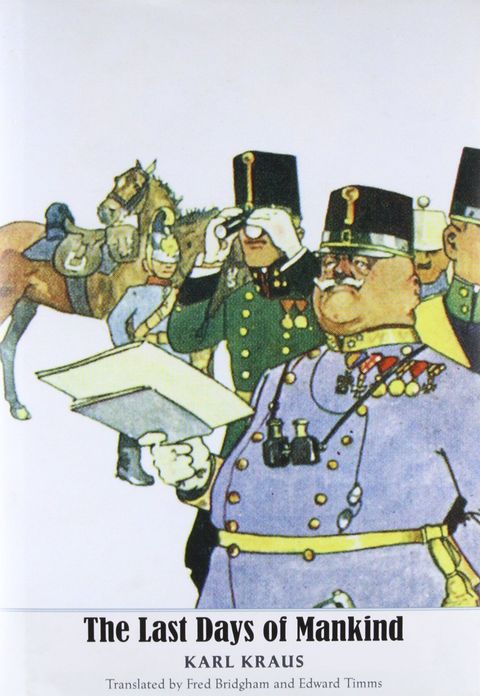
Karl Kraus began The Last Days of Mankind during the First World War, building a vast drama around the collapse of the Austro-Hungarian Empire. The play traces the war from the Austrian army's call to arms toward ruin, drawing on real material: political speeches, newspaper editorials, and recorded public responses. Kraus assembled these documents into a textual collage, mixing them with satirical verse and invented comic scenes.
Among the forces Kraus holds responsible are bungled diplomacy, war profiteers, the complicity of big business, and a credulous newspaper audience. The sloganizing of the press receives the sharpest attention, shown as the machinery that made mass killing sound necessary and even glorious while its consequences went unexamined. Bertolt Brecht described the work as the great dramatic achievement of Viennese modernism, and its scale is unusual for the stage.
This edition presents the first complete English translation of the play, opening a central work of Viennese writing from the era of that war to readers outside German. Its method, quoting the language of officials, editors, and ordinary citizens back at them, keeps the documentary record visible on the surface of the drama rather than reshaping it into invented dialogue.