On the Edge of Reason
SynopsisPlot
In On the Edge of Reason, the protagonist is a middle-aged lawyer whose life and career have been eminently respectable and respected. One evening, at a party, attended by the local elite, he inadvertently blurts out an honest thought. From this moment, all hell breaks loose
Story
About this book
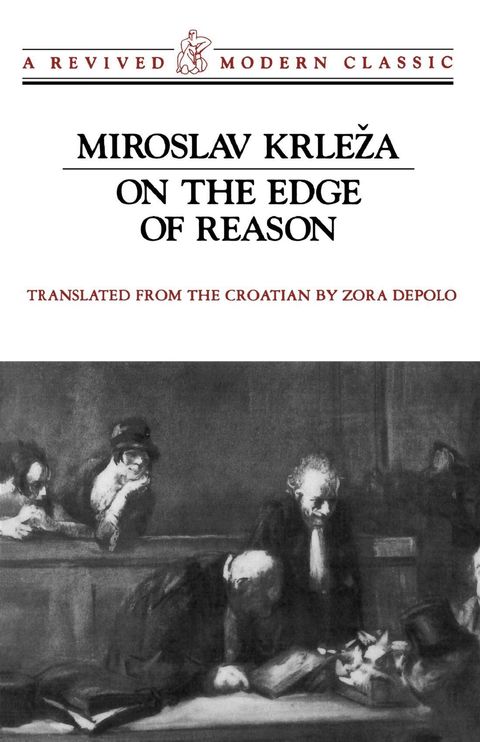
Miroslav Krleza, a Croatian writer who lived from 1893 to 1981, wrote On the Edge of Reason as a story about what happens when a single moment of honesty disrupts a carefully ordered life. The central figure is a middle-aged lawyer, well established and well regarded in his community, who attends a gathering of local notables. During the evening he speaks an unguarded truthful remark, and this small act sets off a chain of consequences that steadily dismantles his standing.
What follows is a confrontation between the individual and the social machinery around him. As others react to his breach of decorum, layers of pretense and collective self-deception become visible. The novel tracks how conformity enforces itself and how the structures people depend on for status and security can turn hostile the moment someone steps outside agreed-upon conventions. Krleza builds the pressure gradually, letting absurdity and hypocrisy accumulate until the boundary between reasonable behavior and unreason grows difficult to locate.
The book is set against a recognizably Central European social landscape, and Krleza draws on his long engagement with questions of political and cultural authority in the region. Susan Sontag described it as one of the great European novels of the first half of the twentieth century.