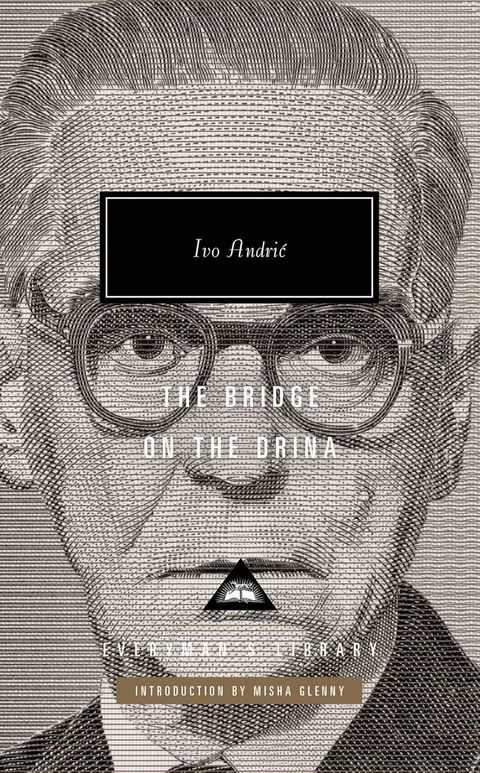
The Bridge on the Drina
SynopsisPlot
The town of Visegrad was long caught between the warring Ottoman and Austro-Hungarian Empires, but its sixteenth-century bridge survived unscathed--until 1914 when tensions in the Balkans triggered the first World War. Spanning generations, nationalities, and creeds, The Bridge on the Drina brilliantly illuminates a succession of lives that swirl around the majestic stone arches. Among them is that of the bridge's builder, a Serb kidnapped as a boy by the Ottomans; years later, as the empire's Grand Vezir, he decides to construct a bridge at the spot where he was parted from his mother. A workman named Radisav tries to hinder the construction, with horrific consequences. Later, the beautiful young Fata climbs the bridge's parapet to escape an arranged marriage, and, later still, an inveterate gambler named Milan risks everything on it in one final game with the devil. With humor and compassion, Ivo Andric chronicles the ordinary Catholics, Muslims, and Orthodox Christians whose lives are connected by the bridge, in a land that has itself been a bridge between East and West for centuries.
Story
About this book
The Bridge on the Drina, first published in 1945, follows the life of a stone bridge over the River Drina at Visegrad, in what is now Bosnia and Herzegovina. It was built in the sixteenth century for a Grand Vezir of the Ottoman Empire, a Serb taken from his mother as a boy, who chose the site of that separation. A workman named Radisav resists the construction and is punished harshly.
Around the bridge, generations of Catholics, Muslims, and Orthodox Christians share a daily life shaped by the empires that govern them. Individual stories surface across the centuries: a young woman named Fata climbs the parapet rather than accept an arranged marriage, and a gambler called Milan stakes everything on one last wager. Visegrad sits between Ottoman and Austro-Hungarian spheres, and each shift of power alters ordinary routines.
The narrative stretches from the late 1500s to 1914, when tensions in the Balkans reach the bridge at the start of the First World War. Ivo Andric built the book as a chain of episodes rather than one continuous plot, with the bridge as the constant presence linking them across nearly four hundred years.