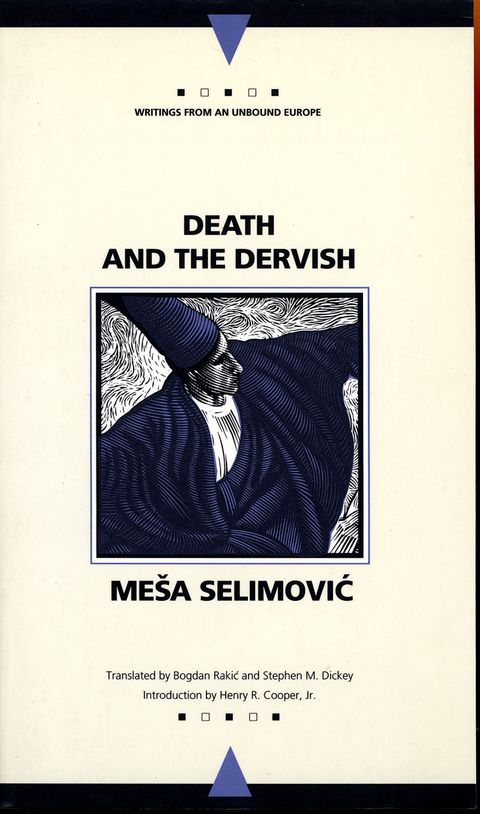
Death and the Dervish
SynopsisPlot
It recounts the story of Sheikh Nuruddin, a dervish residing in an Islamic monastery in Sarajevo in the eighteenth century during the Ottoman Turk hegemony over the Balkans. When his brother is arrested, he must descend into the Kafkaesque world of the Ottoman authorities in his search to discover what happened to him.
Story
About this book
Sheikh Nuruddin is a dervish and spiritual leader at an Islamic monastery in eighteenth-century Sarajevo, living a life deliberately set apart from worldly affairs. His withdrawal ends abruptly when his brother is arrested by the Ottoman authorities who control the Balkans. Nuruddin finds himself forced to leave the monastery and confront a bureaucratic system that offers no clear answers, no transparent process, and no reliable path to justice.
The novel is told in Nuruddin's own voice. As he moves through layers of Ottoman administration trying to learn his brother's fate and secure his release, his encounters with power reshape his understanding of himself. The distance he once maintained from society begins to collapse, and he is pushed toward broader questions about complicity, spiritual isolation, and the choices that have defined his life. The atmosphere has often been compared to Kafka's writing for its portrayal of an individual trapped inside an opaque and indifferent authority.
Mesa Selimovic published the book in Yugoslavia in 1966, where it became a bestseller. The story is set in Ottoman-era Bosnia, but many readers at the time also saw parallels with their own political surroundings. The English translation appeared under the Northwestern University Press imprint.