Trieste
SynopsisPlot
Haya Tedeschi sits alone in Gorizia, in northeastern Italy, surrounded by a basket of photographs and newspaper clippings. Now an old woman, she waits to be reunited after sixty-two years with her son, fathered by an SS officer and stolen from her by the German authorities as part of Himmler’s clandestine Lebensborn project. Haya reflects on her Catholicized Jewish family’s experiences, dealing unsparingly with the massacre of Italian Jews in the concentration camps of Trieste. Her obsessive search for her son leads her to photographs, maps, and fragments of verse, to testimonies from the Nuremberg trials and interviews with second-generation Jews, and to eyewitness accounts of atrocities that took place on her doorstep. From this broad collage of material and memory arises the staggering chronicle of Nazi occupation in northern Italy.
Story
About this book
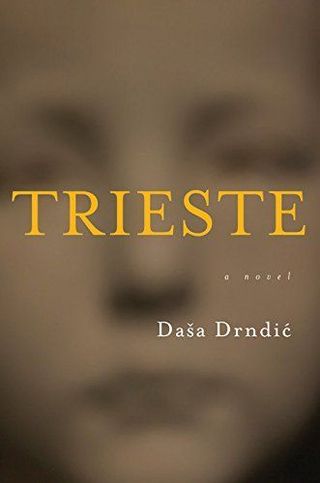
Haya Tedeschi is an elderly woman sitting alone in Gorizia, a city in northeastern Italy near the Slovenian border. Around her lies a collection of photographs, newspaper clippings, and documents. She is waiting to meet the son who was taken from her sixty-two years earlier by German authorities under the Lebensborn program, a secret project organized by Heinrich Himmler to raise children considered racially suitable by the Nazi regime. The boy's father was an SS officer.
Haya's memories reach back through her family's history as Catholicized Jews in the region around Trieste, where Italian Jews were deported and killed in local concentration camps during the German occupation. Her search for her son pulls her through layers of evidence: trial testimonies from Nuremberg, interviews with people born to survivors, eyewitness reports of violence carried out nearby, fragments of poetry, and old maps. The novel by Croatian author Dasa Drndic assembles these elements as a broad collage, mixing fictional narrative with historical documentation.
The structure moves between personal memory and the public record of Nazi occupation in northern Italy. Drndic draws on real names, dates, and places alongside her fictional characters, blurring the boundary between novel and archive.