The House of Remembering and Forgetting

SynopsisPlot
Young Albert Weiss was spared the horrors of Auschwitz when his parents threw him and his brother from the transport train. Years later, with the help of other survivors of the holocaust, he explores the myriad ways of confronting not just the evil that robbed him of his childhood, but the guilt he feels for having lost his brother on that wintry night.
Story
About this book
As a child, Albert Weiss was thrown from a train bound for Auschwitz by his parents, who hoped to save him and his brother from the camp. He survived, but his brother was lost that winter night. The novel follows Albert years later as he tries to understand what happened to him and to locate some way of living with the knowledge of what was done to his family and to millions of others.
Filip David, a Serbian writer, constructs the story in a mosaic, non-linear form. The narrative moves between times and perspectives, drawing on semi-autobiographical elements. Other survivors appear throughout, each carrying a different method of confronting or enduring the past. Albert's struggle is shaped not only by the original violence but by a persistent guilt over his brother's fate, a weight that shifts but does not simply resolve.
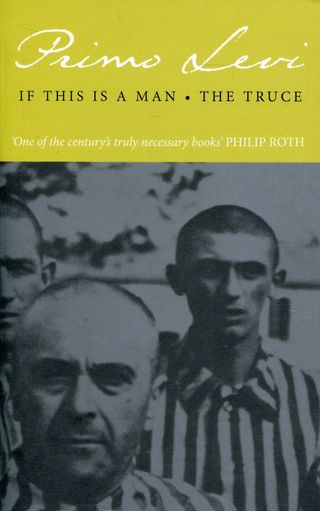
The book has been compared in structure to Kurt Vonnegut's Slaughterhouse-Five and in its subject matter to the writings of Primo Levi. Both comparisons point to the same territory: fiction that addresses large-scale atrocity through fractured, personal memory rather than conventional chronology.