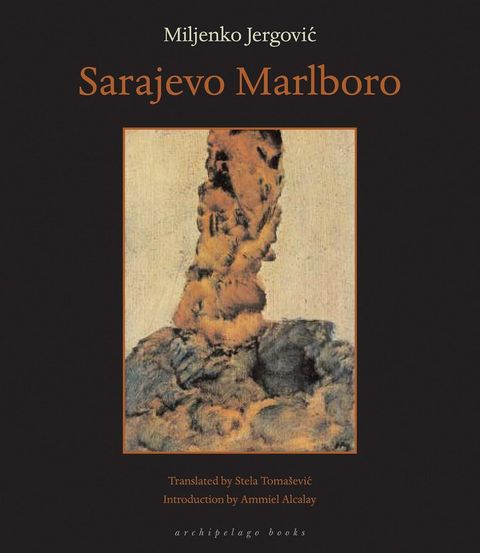
Sarajevo Marlboro
SynopsisPlot
In “melancholy, dreamlike” prose, the stories in Sarajevo Marlboro “recall Alan Lightman's Einstein's Dreams and Italo Calvino's Invisible Cities, but Jergovic’s book is the strongest of the three” (Maud Newton). Croatian by birth, Jergović spent his childhood in Sarajevo and chose to remain there throughout most of the war. These stories are distinctly of the material world, and they are shaped by Jergović’s deeply personal vision, subterranean humor, and a razor-sharp understanding of the fate of the city’s young Muslims, Croats, and Serbs – the minute details of their interior lives in the foreground, the killing zone in the background.
Story
About this book
Sarajevo Marlboro is a collection of short stories by Miljenko Jergović, set in Sarajevo during the 1990s war in Bosnia and Herzegovina. Jergović, Croatian by birth, grew up in the city and stayed through most of the siege. The stories center on everyday people, young Muslims, Croats, and Serbs, caught inside a city under prolonged bombardment. Rather than focusing on the fighting itself, the writing stays close to small, concrete details of daily life: objects, habits, memories, and fleeting encounters.
Jergović places the killing zone in the background while keeping the interior lives of his characters in the foreground. The effect is a collection shaped by dark, understated humor and a persistent sense of loss. Each story operates on its own terms, sometimes dreamlike in structure, sometimes grounded in sharp physical observation. The brevity of the individual pieces gives the book a rhythm that shifts between stillness and sudden tension.
The collection was Jergović's first published book of stories and brought him recognition across Europe. It has been compared to works by Alan Lightman and Italo Calvino for its compressed, meditative approach to storytelling, though its subject matter is rooted in a specific city and a specific conflict.