Too Loud a Solitude
SynopsisPlot
Too Loud a Solitude is a tender and funny story of Hanta––a man who has lived in a Czech police state––for 35 years, working as compactor of wastepaper and books. In the process of compacting, he has acquired an education so unwitting he can't quite tell which of his thoughts are his own and which come from his books. He has rescued many from jaws of hydraulic press and now his house is filled to the rooftops. Destroyer of the written word, he is also its perpetrator.
Story
About this book
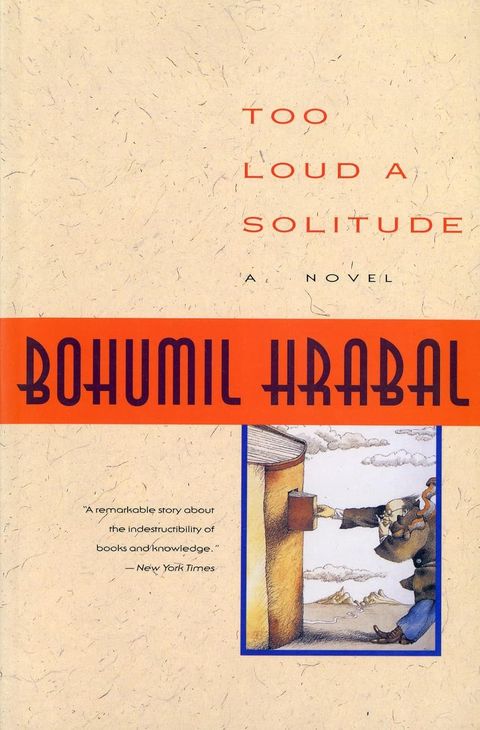
Too Loud a Solitude is a short novel by Czech writer Bohumil Hrabal. Its narrator, Hanta, has spent thirty-five years operating a hydraulic press in a wastepaper compacting plant. His job is to destroy printed material, but over the decades he has pulled countless books from the machine before they are crushed. His home is now stacked floor to ceiling with rescued volumes. Through years of reading salvaged pages, Hanta has absorbed an education he never set out to acquire, and he can no longer distinguish his own thinking from the ideas he has gathered from books.
The story is set against the backdrop of a Czech police state, where the disposal of books carries political weight. Hanta occupies an odd position: he is both the instrument of destruction and a quiet guardian of what he is ordered to destroy. His internal world grows richer even as the system around him tries to reduce written culture to compressed bales of waste. Hrabal keeps the tone surprisingly warm and comic despite the grim setting.
Milan Kundera once called Hrabal the finest Czech writer of his time. The novel is compact in length, running closer to a long story than a traditional novel, and its compressed form mirrors the work Hanta performs each day at his press.