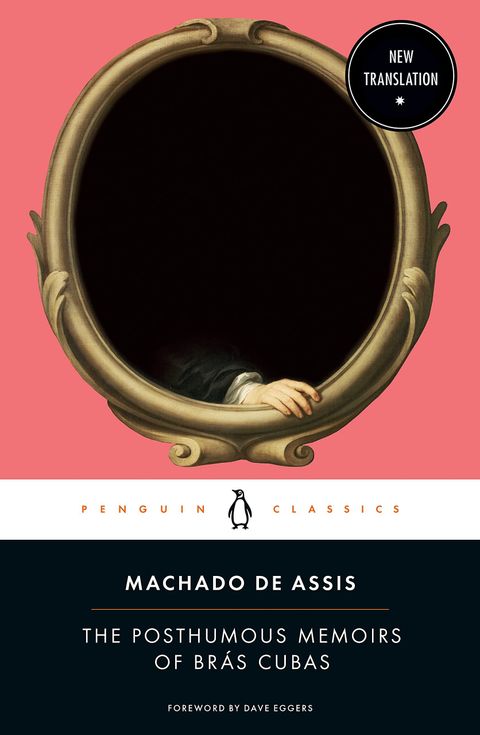
The Posthumous Memoirs of Brás Cubas
SynopsisPlot
In his masterpiece, the 1881 novel The Posthumous Memoirs of Brás Cubas (translated also as Epitaph of a Small Winner), the ghost of a decadent and disagreeable aristocrat decides to write his memoir. He dedicates it to the worms gnawing at his corpse and tells of his failed romances and halfhearted political ambitions, serves up harebrained philosophies, and complains with gusto from the depths of his grave
Story
About this book
The Posthumous Memoirs of Brás Cubas, first serialized in 1880 and published as a book in 1881, is a novel by the Brazilian writer Machado de Assis. Its narrator is a dead man. Brás Cubas, a wealthy and idle member of Rio de Janeiro's upper class, begins writing his life story from beyond the grave, dedicating the account to the worms consuming his body. From this unusual vantage point he recounts failed love affairs, halfhearted attempts at a political career, and eccentric philosophical ideas, all delivered with a sharp, mocking tone.
Machado de Assis acknowledged the influence of Laurence Sterne's Tristram Shandy on the novel's structure. Like Sterne's work, the book abandons linear storytelling in favor of digressions, short chapters of wildly varying length, and direct addresses to the reader. This approach set it apart from the objective realism practiced by European contemporaries such as Flaubert and Zola. The result is a portrait of nineteenth-century Rio de Janeiro filtered through the self-serving and unreliable voice of its narrator.
The novel is widely regarded as a turning point in Brazilian literature, marking the beginning of literary Realism in Brazil, though shaped by Machado de Assis's own inventive and ironic style. At the time of publication, its caustic tone and unconventional form surprised many reviewers.