São Bernardo
SynopsisPlot
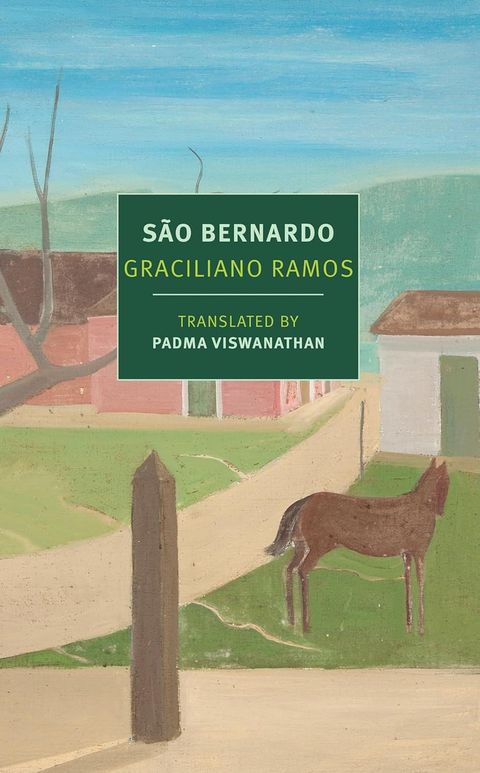
Paulo Honório is a sometime field hand who has kicked and clawed and schemed his way to prosperity, becoming master of the decrepit estate São Bernardo, where once upon a time he toiled. He is ruthless in his exploitation of his fellow man, but when he makes a match with a fine young woman, he is surprised to discover that this latest acquisition, as he sees it, may be somewhat harder to handle. It is in Paulo Honório’s own rough-hewn voice that the great Brazilian writer Graciliano Ramos, often compared to William Faulkner, tells this gritty and dryly funny story of triumph and comeuppance, a tour de force of the writer’s art that is beautifully captured in Padma Viswanathan’s new translation.
Story
About this book
São Bernardo is narrated by Paulo Honório, a man who rose from rural labor to own the estate where he once worked as a field hand. Set in the Brazilian backcountry, the novel follows his aggressive accumulation of land and influence. He sees people largely as instruments, and his voice carries the blunt pragmatism of someone who fought for every advantage. Graciliano Ramos builds the story entirely through this first-person account.
The plot turns when Paulo Honório marries a younger, educated woman. He expects her to fit into the life he has constructed, much as he might acquire another piece of property. Instead, the marriage brings tensions he cannot manage through force or calculation. The contrast between his transactional view of the world and her different temperament drives the central conflict.
Ramos, one of Brazil's recognized twentieth-century novelists, has often been compared to William Faulkner for his spare regional prose. The novel is available in English through a translation by Padma Viswanathan, which keeps the rough, direct quality of Paulo Honório's narration. The book stays close to the landscape and social hierarchies of the country's interior.