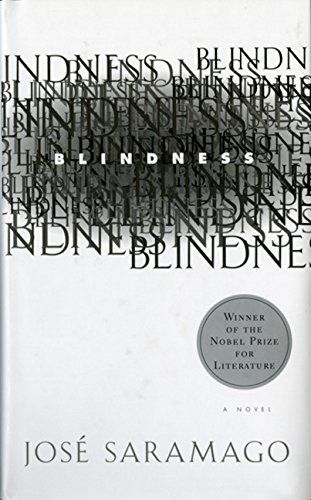
Blindness
SynopsisPlot
A city is hit by an epidemic of "white blindness" which spares no one. Authorities confine the blind to an empty mental hospital, but there the criminal element holds everyone captive, stealing food rations and raping women. There is one eyewitness to this nightmare who guides seven strangers-among them a boy with no mother, a girl with dark glasses, and a dog of tears-through the barren streets, and the procession becomes as uncanny as the surroundings are harrowing. A magnificent parable of loss and disorientation and a vivid evocation of the horrors of the twentieth century, Blindness has swept the reading public with its powerful portrayal of man's worst appetites and weaknesses-and man's ultimately exhilarating spirit.
Story
About this book
An unnamed city is struck by an epidemic of what becomes known as white blindness. The first person affected is a man sitting in his car at a traffic light. He is examined by an eye doctor who cannot explain the condition, and who soon loses his own sight. As the affliction spreads without apparent limit, authorities order those affected into a disused mental hospital, guarded by soldiers told to shoot anyone who tries to leave.
Inside the facility, conditions collapse. A group of inmates seizes control of the food rations and uses violence and coercion against the others. The doctor's wife, who has kept her sight, pretended to be blind so she could stay with her husband, and she becomes the only witness. After fire destroys the compound, she leads a small group into streets that are now unrecognizable: the doctor, a boy without a mother, an old man with a black eye patch, a girl with dark glasses, and a dog.
Saramago, a Portuguese writer who received the Nobel Prize in Literature in 1998, wrote the novel without named characters and with sparse punctuation. The story works as a parable about social order, vulnerability, and what happens when familiar structures vanish at once.