A God Strolling in the Cool of the Evening
SynopsisPlot
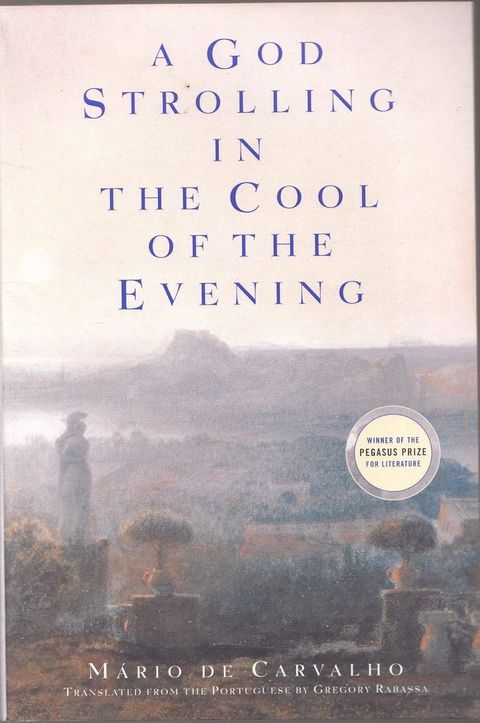
Mario de Carvalho's A God Strolling in the Cool of the Evening is a vivid and affecting historical novel set at the twilight of the Roman Empire and the dawn of the Christian era. Lucius Valerius Quintius is prefect of the fictitious city of Tarcisis, charged to defend it against menaces from without -- Moors invading the Iberian peninsula -- and from within -- the decadent complacency of the Pax Romana. Lucius's devotion to civic duty undergoes its most crucial test when Iunia Cantaber, the beautiful, charismatic leader of the outlawed Christian sect, is brought before his court. A God Strolling in the Cool of the Evening is a timeless story of an era beset by radical upheaval and a man struggling to reconcile his heart, his ethics, and his civic duty.
Story
About this book
Mario de Carvalho's novel is set in a fictional Roman city called Tarcisis on the Iberian peninsula during a period of overlapping crises. Moorish raiders are attacking Roman settlements, but the citizens of Tarcisis remain largely indifferent. Sheltered by generations of stability under the Pax Romana, they occupy themselves with public spectacles and with growing hostility toward a small Christian community living inside the city walls.
The story follows Lucius Valerius Quintius, the city's prefect, who models himself on the Stoic ideals of Marcus Aurelius. Lucius tries to hold the city together against external military threats and internal complacency. His position becomes far more difficult when Iunia Cantaber, the striking and persuasive leader of the local Christian group, is brought to trial before him. The collision between Roman civic order and an outlawed faith forces Lucius to weigh his public responsibilities against his personal convictions.
Carvalho, a Portuguese novelist, received both the Portuguese Writers' Association Grand Prize for Fiction and the Pegasus Prize for Literature for this book. The novel uses the late Roman setting to examine what happens when familiar structures of authority begin to fracture and individuals must decide what they actually owe the communities they serve.