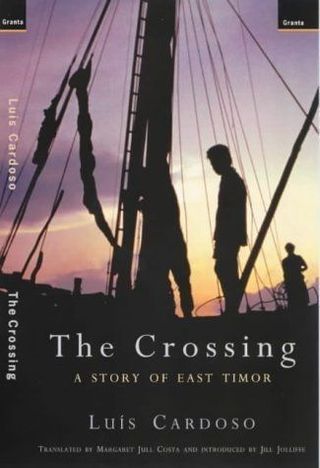
Crossing: A Story of East Timor
SynopsisPlot
As a Portuguese colony in the early 1970s, pining for the motherland's attention, Timor was a strange, unstable hybrid, where folk stories blended with stories from the Bible, where the summit of a young man's aspiration was to become a priest or a customs official, and where growing up in Dili meant football, flares, korem-metam parties and chatting up the tourists. But when, after failing at the seminary, Cardoso joins other Timorese students on scholarship in Lisbon, he soon realizes his pilgrimage to the great metropolis is in fact another exile. Meanwhile the Indonesian invasion of 1975 forces a second stage of the Timorese diaspora, including Cardoso's ailing father, from whom he learns the first details of the fate of his countrymen.
Story
About this book
Luis Cardoso grew up in East Timor during the early 1970s, when the territory was still a Portuguese colony. His memoir describes a place shaped by overlapping influences: local folk traditions mixed with Catholic teaching, and daily life in the capital Dili revolved around football, social gatherings, and the quiet hope of becoming a priest or a customs official. The colony looked toward Lisbon as a cultural center, yet received little of the metropolis's attention in return.
When Cardoso left East Timor on a student scholarship to study in Portugal, he expected arrival at a kind of homeland. Instead, Lisbon felt like another form of displacement. Back in East Timor, the Indonesian invasion of 1975 scattered communities and forced many Timorese, including Cardoso's father, into exile. Through letters and fragmented news, Cardoso began to learn what was happening to the people he had left behind.
The book traces how successive waves of outside control shaped Timorese culture and personal identity. Cardoso writes from a position between worlds, belonging fully to neither the colony nor the colonial capital. His account records a small society caught in transitions it did not choose, observed through the specific details of one family's experience.