Beloved Land: Stories, Struggles and Secrets from Timor-leste
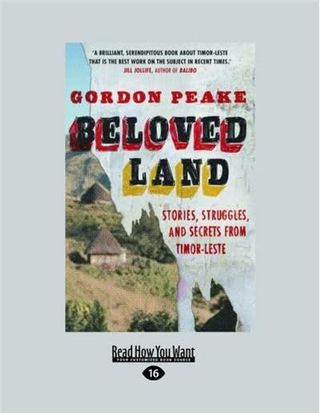
SynopsisPlot
At the stroke of midnight on 20 May 2002, the Democratic Republic of Timor-Leste became the first new nation of the 21st century. From that moment, those who fought for independence have faced a challenge even bigger than shaking off Indonesian occupation: running a country of their own. Beloved Land picks up the story where world attention left off. Blending narrative history, travelogue, and personal reminiscences based on four years of living in the country, Gordon Peake shows the daunting hurdles that the people of Timor-Leste must overcome to build a nation from scratch, and how much the international community has to learn if it is to help rather than hinder the process. Family politics, squabbles, power struggles, old romances, and even older grudges are woven into life in this land of intrigue and rumours in the most remarkable ways.
Story
About this book
At midnight on 20 May 2002, Timor-Leste formally became an independent state, the first new sovereign nation of the twenty-first century. After a long struggle against Indonesian occupation, the country faced a different and in some ways harder task: building functioning institutions, settling internal disputes, and shaping a national identity from the ground up. Gordon Peake's Beloved Land begins where most international coverage stopped, turning attention to the years that followed independence.
Peake lived in Timor-Leste for four years, and the book draws on that period to combine narrative history, travel writing, and personal observation. He portrays a range of Timorese and international figures whose lives intersect with the young nation's politics. Family loyalties, old rivalries, power contests, and lingering grievances from the occupation era all surface in his account. The book also examines the role of the international community in the country's development, noting how outside assistance can both support and complicate local efforts.
Timor-Leste occupies the eastern half of Timor island in Southeast Asia, sharing a land border with Indonesian West Timor. Peake's account places the reader inside a small, geographically distinct country where rumour, personal history, and national politics are closely intertwined.