Another Day of Life
SynopsisPlot
In 1975, Angola was tumbling into pandemonium; everyone who could was packing crates, desperate to abandon the beleaguered colony. With his trademark bravura, Ryszard Kapuscinski went the other way, begging his was from Lisbon and comfort to Luanda—once famed as Africa's Rio de Janeiro—and chaos.Angola, a slave colony later given over to mining and plantations, was a promised land for generations of poor Portuguese. It had belonged to Portugal since before there were English-speakers in North America. After the collapse of the fascist dictatorship in Portugal in 1974, Angola was brusquely cut loose, spurring the catastrophe of a still-ongoing civil war. Kapuscinski plunged right into the middle of the drama, driving past thousands of haphazardly placed check-points, where using the wrong shibboleth was a matter of life and death; recording his imporessions of the young soldiers—from Cuba, Angola, South Africa, Portugal—fighting a nebulous war with global repercussions; and examining the peculiar brutality of a country surprised and divided by its newfound freedom.
Story
About this book
In 1975, as Angola lurched toward independence after centuries of Portuguese colonial rule, most foreigners were trying to leave. Polish journalist Ryszard Kapuscinski traveled in the opposite direction, making his way from Lisbon to Luanda, a city once compared to Rio de Janeiro but now sliding into disorder. Angola had been a Portuguese colony since before English-speaking settlers reached North America, and the collapse of Portugal's fascist government in 1974 triggered a rapid and disorganized withdrawal that left the territory fractured by competing factions.
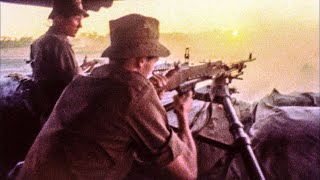
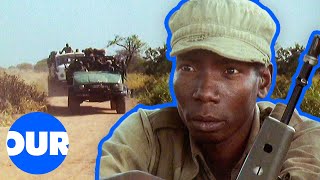
Kapuscinski's account follows his movements through a country caught between liberation and violence. He drove past countless checkpoints where saying the wrong word to the wrong group could be fatal. The soldiers he encountered came from several countries, including Cuba, South Africa, and Portugal, each drawn into a conflict with broad Cold War dimensions. Rather than offering a conventional journalistic report, Kapuscinski mixed close observation with literary writing, recording the texture of daily life in a place where ordinary routines had broken down.
The book sits at the boundary between memoir and war correspondence. It captures the confusion of a society abruptly released from colonial control and immediately pulled apart by internal and external forces, with no stable authority to replace what had been removed.