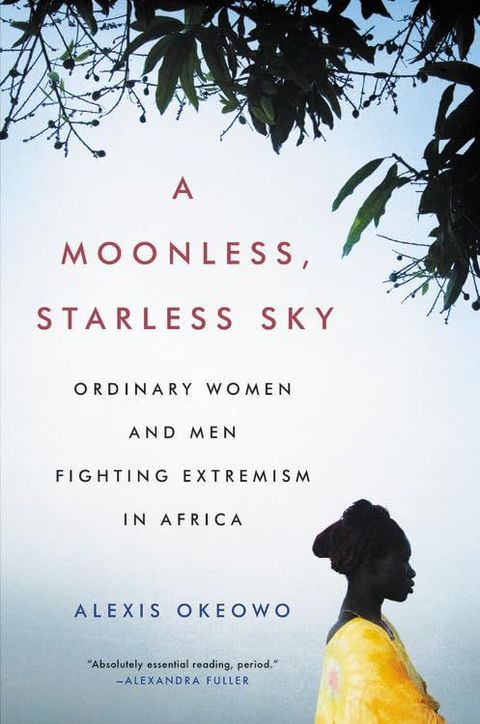
A Moonless, Starless Sky: Ordinary Women and Men Fighting Extremism in Africa
SynopsisPlot
In A Moonless, Starless Sky, Okeowo weaves together four narratives that form a powerful tapestry of modern Africa: a young couple, kidnap victims of Joseph Kony's LRA; a Mauritanian waging a lonely campaign against modern-day slavery; a women's basketball team flourishing amid war-torn Somalia; and a vigilante who takes up arms against the extremist group Boko Haram. This debut book by one of America's most acclaimed young journalists illuminates the inner lives of ordinary people doing the extraordinary--lives that are too often hidden, under reported, or ignored by the rest of the world.
Story
About this book
A Moonless, Starless Sky gathers four separate stories reported across different parts of Africa. Alexis Okeowo, a staff writer at the New Yorker, follows a young couple abducted by Joseph Kony's Lord's Resistance Army, an activist in Mauritania campaigning almost alone against hereditary slavery, a women's basketball team in Somalia, and a man who took up arms against Boko Haram. Each strand sits in a place where conflict or old systems of control shape ordinary decisions.
The settings differ sharply. The basketball players train and compete in Mogadishu while the city remains a conflict zone. Slavery in Mauritania is hereditary and outlawed, yet still practiced in parts of the country. Okeowo keeps close to the people involved rather than to governments or armed groups, describing the choices available to them and the costs attached.
This was Okeowo's first book, drawn from reporting she carried out over several years. The New York Times Book Review called it rich and urgently necessary. The subjects are private citizens rather than officials, and their efforts are often unrecorded outside their own communities, which is part of what the book sets out to correct.