The Abandoned Baobab
SynopsisPlot
Abandoned by her mother and sent to live with relatives in Dakar, the author tells of being educated in the French colonial school system, where she comes gradually to feel alienated from her family and Muslim upbringing, growing enamored with the West. Academic success gives her the opportunity to study in Belgium, which she looks upon as a "promised land." There she is objectified as an exotic creature, however, and she descends into promiscuity, alcohol and drug abuse, and, eventually, prostitution. (It was out of concern on her editor’s part about her candor that the author used the pseudonym Ken Bugul, the Wolof phrase for "the person no one wants.") Her return to Senegal, which concludes the book, presents her with a past she cannot reenter, a painful but necessary realization as she begins to create a new life there.
Story
About this book
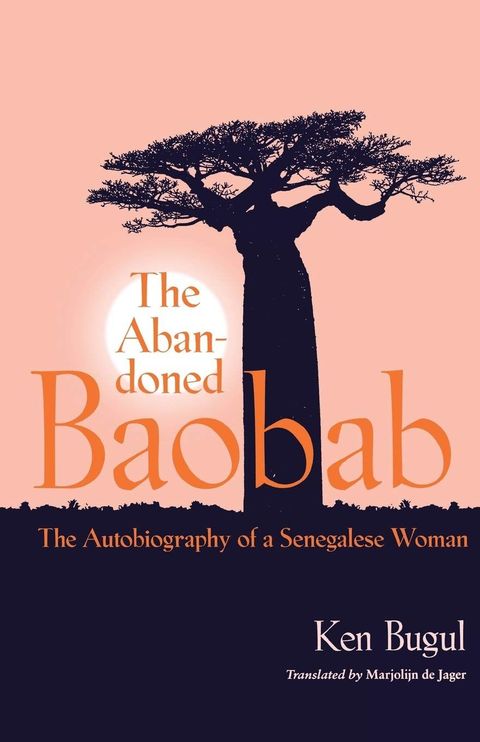
The Abandoned Baobab is an autobiographical narrative by the Senegalese writer who publishes as Ken Bugul, a Wolof phrase meaning roughly the person no one wants. Her editor suggested the pen name because of how candid the material was. The book follows her early years after she was separated from her mother, raised by relatives in Dakar and educated in the French colonial school system.
That schooling gradually loosened her ties to her family and her Muslim upbringing while drawing her toward Europe. Academic success opened a path to study in Belgium, a country she approached as a promised land. There she found herself treated as an exotic object, and the account records a decline into alcohol, drugs and prostitution, set down in plain and direct language without excuse.
The closing section brings her back to Senegal, where the past she left behind cannot simply be entered again and a new life has to be assembled from what remains. The title points to the baobab, a broad, long-lived tree common across Senegal and often a gathering point in village life. The book first appeared in French in 1982 as Le Baobab fou.