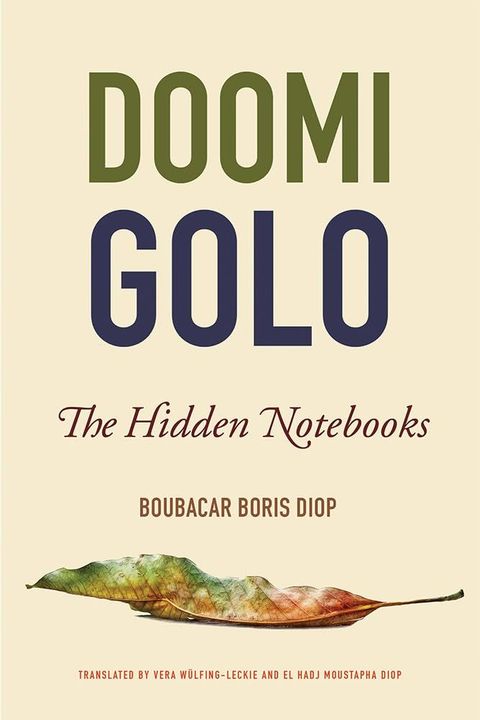
Doomi Golo―The Hidden Notebooks
SynopsisPlot
With a narrative structure that beautifully imitates the movements of a musical piece, Diop relates Faye’s trauma of losing his only son, Assane Tall, which is compounded by his grandson Badou’s migration to an unknown destination. While Faye feels certain that his grandson will return one day, he also is convinced that he will no longer be alive by then. Faye spends his days sitting under a mango tree in the courtyard of his home, reminiscing and observing his surroundings. He speaks to Badou through his seven notebooks, six of which are revealed to the reader, while the seventh, the “Book of Secrets,” is highly confidential and reserved for Badou’s eyes only. In the absence of letters from Badou, the notebooks form the only possible means of communication between the two, carrying within them tunes and repetitions that give this novel its unusual shape: loose and meandering on the one hand, coherent and tightly interwoven on the other.
Story
About this book
Doomi Golo is the work of Senegalese author Boubacar Boris Diop, originally written in Wolof and later translated into English. It is recognized as the first novel translated from Wolof to English. The story centers on Nguirane Faye, an aging man who sits beneath a mango tree in his courtyard, writing notebooks addressed to his grandson Badou. Badou has migrated to an unknown destination, and Faye has received no letters from him. Faye is convinced his grandson will eventually return but equally certain he himself will not be alive to see it. The notebooks become his only way of speaking across that distance.
Faye carries the grief of losing his only son, Assane Tall, and the absence of Badou deepens that loss. He fills seven notebooks with memories, observations, and reflections. Six of these are open to the reader, while the seventh is kept sealed, reserved for Badou alone. The structure of the novel mirrors a musical composition, with recurring themes, repetitions, and wandering passages that circle back on themselves. The narrative moves between loose, conversational stretches and tightly connected threads, giving the book a shape that feels both spontaneous and carefully composed.