Segu

SynopsisPlot
The year is 1797, and the kingdom of Segu is flourishing, fed by the wealth of its noblemen and the power of its warriors. The people of Segu, the Bambara, are guided by their griots and priests; their lives are ruled by the elements. But even their soothsayers can only hint at the changes to come, for the battle of the soul of Africa has begun. From the east comes a new religion, Islam, and from the West, the slave trade. Segu follows the life of Dousika Traore, the king’s most trusted advisor, and his four sons, whose fates embody the forces tearing at the fabric of the nation. There is Tiekoro, who renounces his people’s religion and embraces Islam; Siga, who defends tradition, but becomes a merchant; Naba, who is kidnapped by slave traders; and Malobali, who becomes a mercenary and halfhearted Christian.
Story
About this book
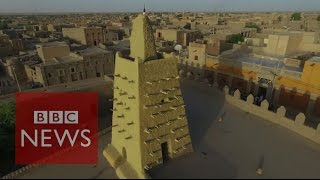
Set in 1797, Segu is rooted in the history of the Bambara kingdom centered on the city of Ségou in present-day Mali. The kingdom was prosperous then, sustained by its warriors and governed through nobles, griots (oral historians and musicians), and priests whose authority rested on local spiritual traditions. Maryse Condé draws on documented events to build a story around Dousika Traoré, a trusted advisor to the king, and his four sons.
Each son is carried in a different direction by the pressures bearing down on the region. Tiekoro leaves his family's spiritual practices and converts to Islam, which was spreading across the Sahel. Siga holds to Bambara custom yet is pulled into trade. Naba is seized by slave traders. Malobali becomes a mercenary and a half-hearted Christian. Through these paths, the novel traces how the slave trade and the growth of Islam reshaped households from within.
Condé, born in Guadeloupe, lived and taught in West Africa for years. Her novel is set against real upheavals in the inland Niger region during the late eighteenth century, when established kingdoms met overlapping outside pressures from two directions at once.