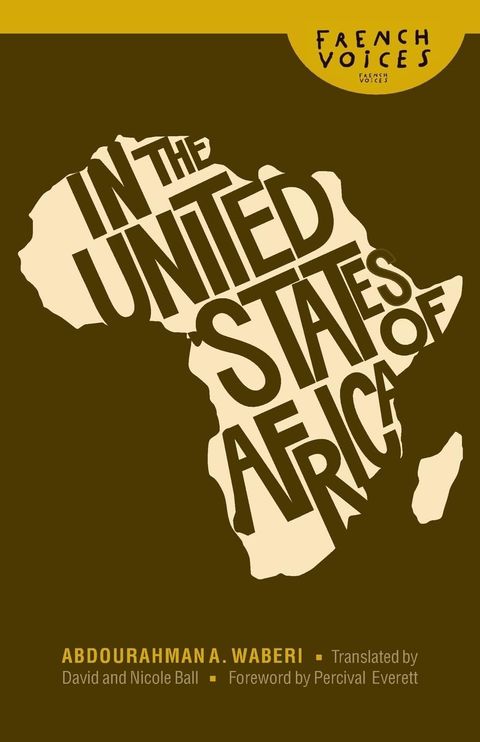
In the United States of Africa
SynopsisPlot
On this reimagined globe a stream of sorry humanity flows from the West, from the slums of America and the squalor of Europe, to escape poverty and desperation in the prosperous United States of Africa. It is in this world that an African doctor on a humanitarian mission to France adopts a child. Now a young artist, this girl, Malaïka, travels to the troubled land of her birth in hope of finding her mother—and perhaps something of her lost self. Her search, at times funny and strange, is also deeply poignant, reminding us at every moment of the turns of fate we call truth.
Story
About this book
In this novel by Abdourahman A. Waberi, the global order is reversed. Africa is a unified, prosperous superpower, while Europe and the Americas are impoverished regions marked by conflict and deprivation. Desperate migrants from Western countries cross borders toward African cities in search of safety and opportunity. The premise flips familiar migration patterns and economic hierarchies, placing African nations at the center of wealth, cultural influence, and political stability.
The story follows Malaïka, a young artist who was adopted as a child by an African doctor working on a humanitarian mission in France. Raised in comfort on the African continent, she eventually travels to the struggling land of her birth to search for her biological mother. Her personal quest unfolds against the larger backdrop of this inverted world, where the language of aid, charity, and cultural superiority runs in the opposite direction from what present-day readers recognize.
Waberi, who was born in Djibouti and writes in French, uses satire and speculative geography to examine assumptions about prosperity, migration, and identity. The novel reframes questions that are often discussed in fixed terms by simply switching which continent holds power and which one does not.