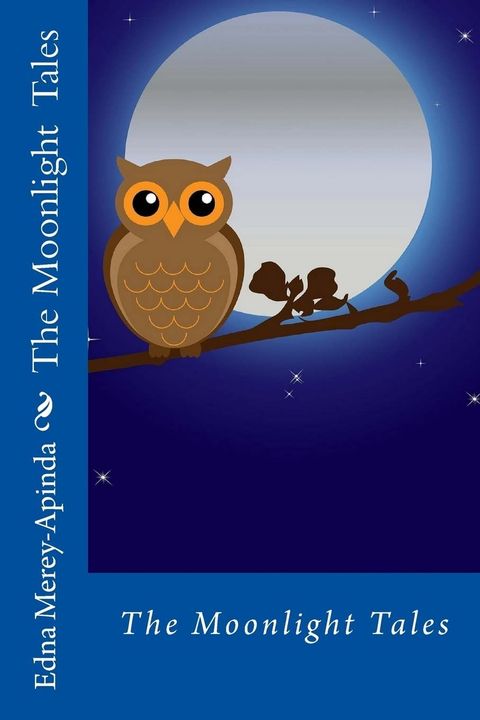
The Moonlight Tales
SynopsisPlot
The Moonlight Tales begins with an introduction in the form of a conversation between the moon and her friend, the horned owl. The four stories that follow are part of that conversation and told by the horned owl to the moon per her request. Here, Merey-Apinda adheres to a common practice in African oral literature by which protagonists are often animals or other realities of nature like the moon, sun, or stars instead of human beings. This technique adds a more magical feel to the stories, although the messages conveyed are very applicable to the lives of the ordinary man, woman, or child. While Merey-Apinda is obviously inspired by African oral literature, what she offers is not an exact replicate.
Story
About this book
The Moonlight Tales by Edna Merey-Apinda opens with a conversation between the moon and a horned owl. The owl, at the moon's request, tells four stories that form the body of the book. This framing device draws on a tradition found across African oral literature, where animals, celestial bodies, and other elements of the natural world serve as characters rather than human beings. Merey-Apinda, who is from Gabon, adapts this approach rather than reproducing it directly, shaping her own version of the storytelling form.
Each of the four tales carries themes relevant to everyday life, addressing problems recognizable in the present day. The animal and nature-based characters give the stories a quality that sits between fable and allegory, allowing the situations to feel both distant and familiar. The messages within the stories are intended for readers of different ages, and the language of the book reflects that broad aim.
The structure of a conversation between the moon and the owl connects the four separate tales into a single frame. This kind of nesting, where one character tells stories to another, is a widespread technique in oral traditions across West and Central Africa and gives the collection a sense of continuity beyond its individual parts.