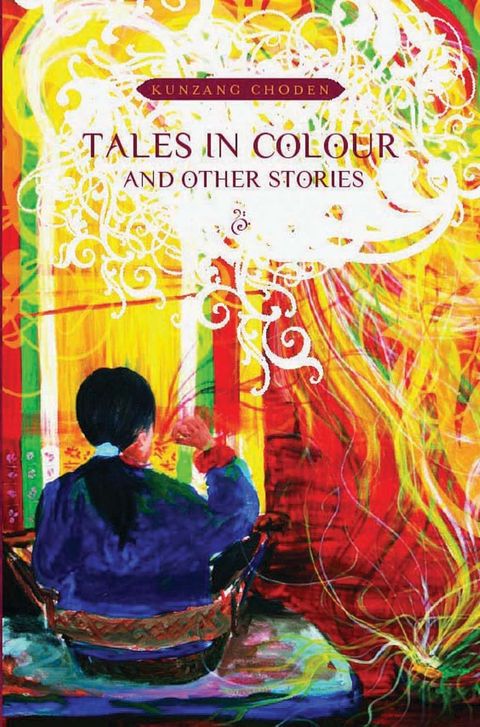
Tales in Colour and Other Stories
SynopsisPlot
In I am a Small Person, a despised woman uses her femininity as a means to control a man, the young girl in I Won't ask Mother suddenly feels empowered and confident when she makes a decision without consulting her mother. All the stories take place in rural settings, to which creeping urbanisation brings gradual change, and tensions surface between the new and the old, or the traditional and the modern. For many rural women, being able to connect to the city and all its perceived power and glamour is a very real aspiration. This yearning is exemplified in Look at her Belly Button, where a young woman effortlessly slips out of the role of a farmer to become a 'real Bhutanese' urbanite.
Story
About this book
Tales in Colour and Other Stories is a collection of thirteen short stories by Kunzang Choden, set in rural Bhutan. The stories follow women at different stages of life as they navigate the pressures of a country where traditional village ways and modern urban influence exist side by side. Each story captures a specific moment of tension or decision, often small in scale but significant for the woman at its center.
In one story, a woman regarded with contempt uses her own femininity to gain control over a man. In another, a young girl feels a new sense of confidence after making a choice without her mother's guidance. A recurring thread across the collection is the pull of the city. For many rural women in these pages, urban life represents power and possibility. One story follows a young woman who moves away from farming and adopts the habits of city life with apparent ease, drawn by the idea of becoming a different kind of Bhutanese person.
Choden's writing stays close to everyday details of rural Bhutanese life, where change arrives gradually and its effects are sometimes welcome, sometimes disorienting. The collection gives attention to moments that might otherwise go unnoticed, placing ordinary choices against the larger shifts reshaping the country.