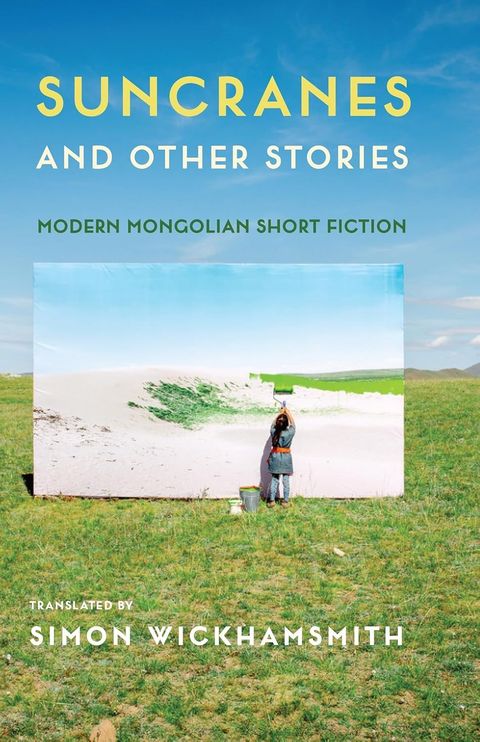
Suncranes and Other Stories: Modern Mongolian Short Fiction
SynopsisPlot
Over the course of the twentieth century, Mongolian life was transformed, as a land of nomadic communities encountered first socialism and then capitalism and their promises of new societies. The stories collected in this anthology offer literary snapshots of Mongolian life throughout this tumult. Spanning the years following the socialist revolution of 1921 through the early twenty-first century, these stories from the country’s most highly regarded prose writers show how Mongolian culture has forged links between the traditional and the modern. Writers employ a wide range of styles, from Aesopian fables through socialist realism to more experimental forms, influenced by folktales and epics as well as Western prose models. They depict the drama of a nomadic population struggling to understand a new approach to life imposed by a foreign power while at the same time benefiting from reforms, whether in the capital city Ulaanbaatar or on the steppe. Across the mix of stories, Mongolia’s majestic landscape and the people’s deep connection to it come through vividly.
Story
About this book
Suncranes and Other Stories gathers modern Mongolian short fiction in English translation by Simon Wickhamsmith. The selection spans roughly a century, beginning after the socialist revolution of 1921 and reaching into the early twenty-first century. In that period a largely nomadic society met socialism and later capitalism, each arriving with its own promise of a new kind of society.
Styles vary widely. Some pieces work as fables in the Aesopian manner, using animals to make a point; others follow socialist realism, a state-approved style of the socialist period, and some take more experimental shapes. Folktales and epic poetry sit alongside Western prose models. Settings shift between Ulaanbaatar, the capital, and the wide grassland of the steppe, where the landscape and people's ties to it recur throughout.
Recurring tensions run through the collection: people trying to understand a way of life introduced by a foreign power, while also benefiting from some of the reforms that arrived with it. The writers included are among Mongolia's most highly regarded prose authors, and their stories move between herding life and the capital.