Red Sorghum
SynopsisPlot
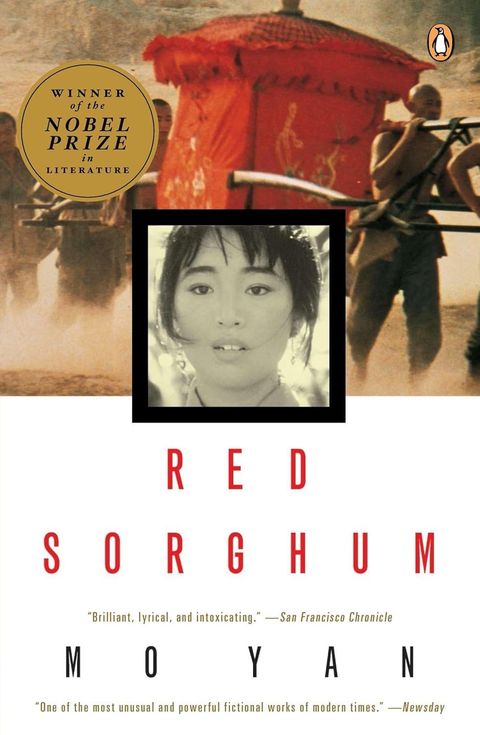
Spanning three generations, this novel of family and myth is told through a series of flashbacks that depict events of staggering horror set against a landscape of gemlike beauty, as the Chinese battle both Japanese invaders and each other in the turbulent 1930s. A legend in China, where it won major literary awards and inspired an Oscar-nominated film directed by Zhang Yimou, Red Sorghum is a book in which fable and history collide to produce fiction that is entirely new—and unforgettable.
Story
About this book
Red Sorghum follows three generations of one family in rural Shandong Province, told through layered flashbacks rather than a straight line. Much of the action falls in the late 1930s, during the Japanese invasion of China, and moves between armed conflict and the ordinary work of village life. The sorghum fields themselves hold the story, serving as farmland, hiding place, and battleground.
Mo Yan builds the book from local legend, family memory, and folk storytelling, so history and fable sit close together. The characters are caught between Japanese troops and rival Chinese fighters, and the earlier generations reach the page through inherited accounts rather than direct witness. Scenes of extreme violence alternate with close attention to the land, the weather, and the harvest.
The novel won major literary awards in China and gained wider attention through Zhang Yimou's film adaptation, which received an Oscar nomination. Mo Yan was later awarded the Nobel Prize in Literature. Sorghum, the grain named in the title, grows widely across northern China and is used both as food and for distilled liquor.