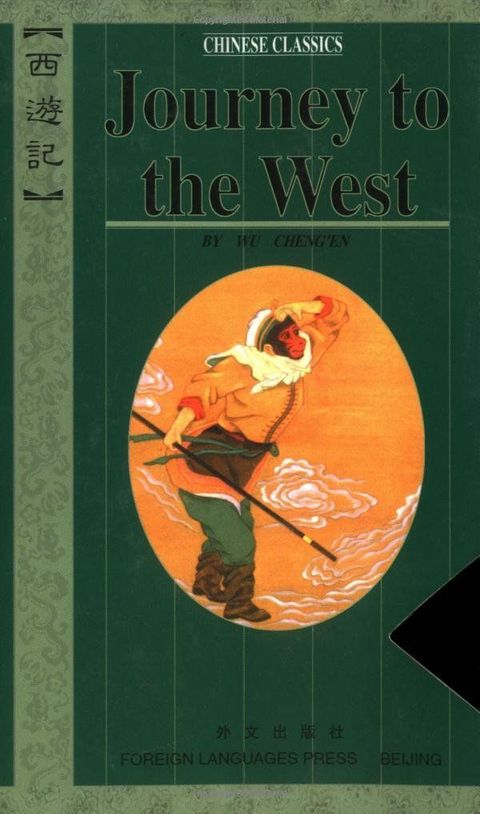
Journey to the West
SynopsisPlot
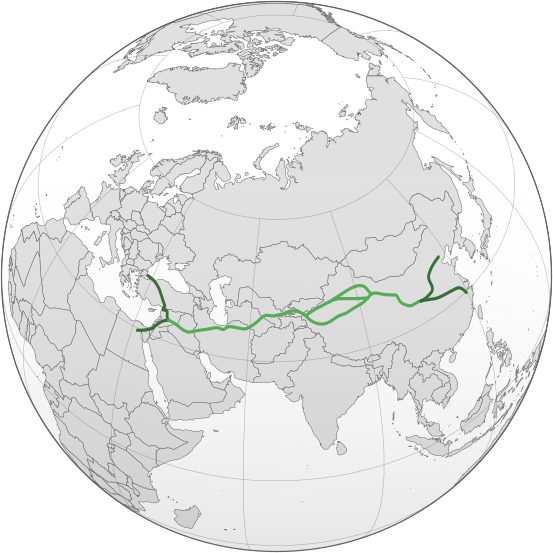
Consisting of 100 chapters, this fantasy relates the adventures of a Tang Dynasty (618-907) priest Sanzang and his three disciples, Monkey, Pig, and Friar Sand, as they travel west in search of Buddhist Sutra. The first seven chapters recount the birth of the Monkey King and his rebellion against Heaven. Then in chapters eight to twelve, we learn how Sanzang was born and why he is searching for the scriptures, as well as his preparations for the journey. The rest of the story describes how they vanquish demons and monsters, tramp over the Fiery Mountain, cross the Milky Way, and after overcoming many dangers, finally arrive at their destination - the Thunder Monastery in the Western Heaven - and find the Sutra.
Story
About this book
Journey to the West is a Chinese mythological novel attributed to Wu Cheng'en, written during the Ming Dynasty and drawing on older folktales. The story spans 100 chapters and follows the Tang Dynasty monk Sanzang and his three companions, Monkey, Pig, and Friar Sand, as they travel westward to obtain Buddhist scriptures. The opening chapters tell the origin of the Monkey King and his revolt against the heavens, while later sections introduce Sanzang's background and the reasons behind his quest.
The bulk of the novel tracks the group's long westward road, where they face demons, monsters, treacherous landscapes, and supernatural obstacles. Episodes such as crossing the Fiery Mountain give the story a serial structure, with each challenge testing the travelers in different ways. Monkey is the most prominent figure, a trickster whose cunning and defiance sit alongside genuine loyalty to his companions. The novel blends folk comedy, allegory, and religious themes drawn from Buddhism, Taoism, and Confucianism.
The work has held a central place in Chinese literature for centuries and remains one of the most widely read novels in East Asia. Its characters, particularly the Monkey King, have appeared across countless adaptations in theatre, film, television, and games.