Tales of a Shaman's Apprentice
SynopsisPlot
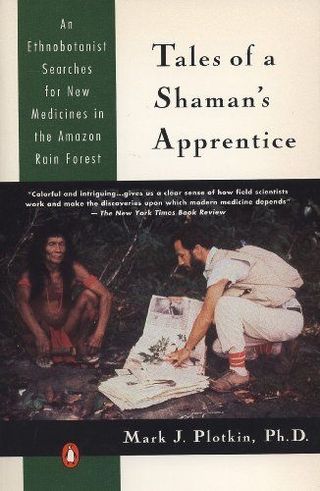
For more than a decade, Dr. Plotkin raced against time to harvest and record new plants before the rain forests' fragile ecosystems succumb to overdevelopment—and before the Indians abandon their own culture and learn for the seductive appeal of Western material culture. Tales of a Shaman's Apprentice relates nine of the author's quests, taking the reader along on a wild odyssey as he participates in healing rituals; discovers the secret of curare, the lethal arrow poison that kills in minutes; tries the hallucinogenic snuff epena that enables the Indians to speak with their spirit world, and earns the respect and fellowship of the mysterious shamans as he proves that he shares both their endurance and their reverence for the rain forest.
Story
About this book
Mark J. Plotkin is an ethnobotanist, a scientist who studies how indigenous peoples use plants. Over more than a decade, he traveled through the tropical forests of Suriname, Brazil, and Venezuela, working alongside the Trio, Wayana, and Yanomamo peoples to document their knowledge of medicinal and psychoactive plants. This book recounts nine of those expeditions, describing encounters with shamans who served as healers and keepers of botanical expertise passed across generations.
Plotkin's fieldwork unfolded against two converging pressures. Deforestation and development were destroying the ecosystems where these plants grew, while younger generations in indigenous communities were increasingly drawn toward Western material culture, leaving shamanic traditions without successors. The book describes specific plant discoveries, including research into curare, a potent arrow poison, and epena, a hallucinogenic snuff used in spiritual rituals. It also records the healing ceremonies Plotkin observed and the trust he gradually built with the shamans who shared their knowledge.
A recurring concern throughout is the question of how plant-based medical knowledge held by indigenous communities might be preserved and, where possible, patented in ways that direct revenue back to those communities rather than away from them.