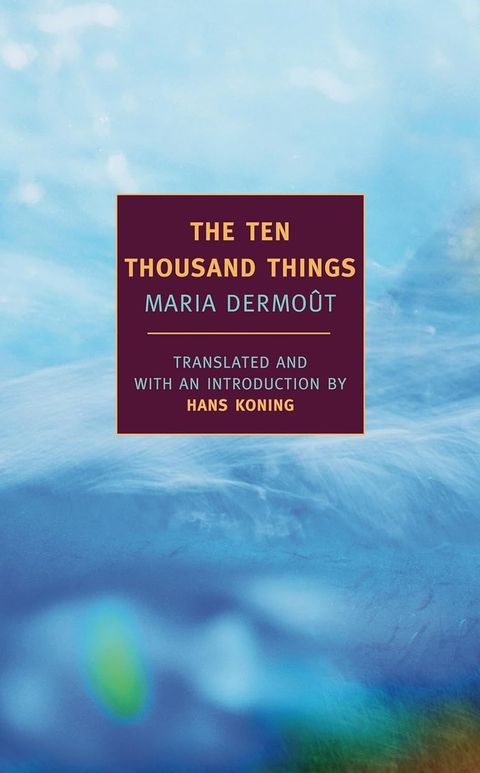
The Ten Thousand Things
SynopsisPlot
In Wild, Cheryl Strayed writes of The Ten Thousand Things: "Each of Dermoût’s sentences came at me like a soft knowing dagger, depicting a far-off land that felt to me like the blood of all the places I used to love.” And it's true, The Ten Thousand Things is at once novel of shimmering strangeness—and familiarity. It is the story of Felicia, who returns with her baby son from Holland to the Spice Islands of Indonesia, to the house and garden that were her birthplace, over which her powerful grandmother still presides. There Felicia finds herself wedded to an uncanny and dangerous world, full of mystery and violence, where objects tell tales, the dead come and go, and the past is as potent as the present. First published in Holland in 1955, Maria Dermoût's novel was immediately recognized as a magical work, like nothing else Dutch—or European—literature had seen before. The Ten
Story
About this book
Maria Dermoût's novel follows Felicia, a young woman who leaves Holland and returns with her infant son to the Spice Islands of Indonesia, where she was born. The family house and its garden are still governed by her formidable grandmother, and Felicia settles back into a landscape both familiar and unsettling. The story is set in the Moluccas, an archipelago once central to the global spice trade, where colonial Dutch life and local traditions coexist in uneasy proximity.
Objects in Felicia's world carry stories of their own. The dead do not stay entirely absent, and the boundary between past and present grows thin. Violence and mystery surface alongside the lush natural surroundings, and the novel moves through these elements with a calm, strange rhythm rather than conventional plot momentum. Dermoût, who was born and raised in the Dutch East Indies, drew on decades of personal familiarity with the region.
The book was first published in the Netherlands in 1955 and was recognized at the time as unlike anything in Dutch literary tradition. Its atmosphere combines precise observation of tropical plants, sea, and domestic life with an openness to the uncanny that gives the narrative an unusual, quiet intensity.