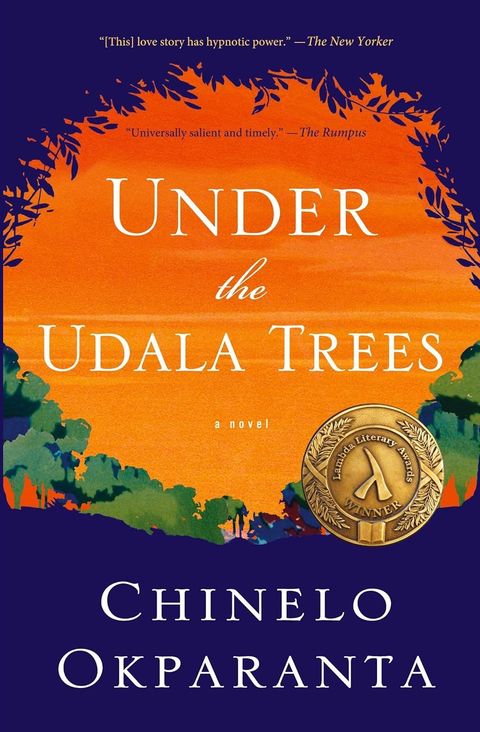
Under The Udala Trees
SynopsisPlot
Ijeoma comes of age as her nation does; born before independence, she is eleven when civil war breaks out in the young republic of Nigeria. Sent away to safety, she meets another displaced child and they, star-crossed, fall in love. They are from different ethnic communities. They are also both girls. When their love is discovered, Ijeoma learns that she will have to hide this part of herself. But there is a cost to living inside a lie. As Edwidge Danticat has made personal the legacy of Haiti's political coming of age, Okparanta's Under the Udala Trees uses one woman's lifetime to examine the ways in which Nigerians continue to struggle toward selfhood. Even as their nation contends with and recovers from the effects of war and division, Nigerian lives are also wrecked and lost from taboo and prejudice. This story offers a glimmer of hope -- a future where a woman might just be able to shape her life around truth and love.
Story
About this book
Ijeoma is born in Nigeria shortly before independence, and she is eleven years old when the country's civil war begins in the late 1960s. Displaced from her home and sent to live with relatives for safety, she meets another girl who has also been uprooted by the conflict. The two come from different ethnic communities, and their growing closeness develops into a first love that neither of them expected.
When the relationship is found out, Ijeoma faces intense pressure to suppress who she is. The novel follows her across years as she navigates a society shaped by both the aftermath of war and deeply rooted cultural taboos around same-sex relationships. Okparanta draws on Nigerian folktales and biblical passages throughout the story, weaving them into Ijeoma's attempts to reconcile what she has been taught with what she knows to be true about herself.
The setting spans several decades of Nigerian history, from the Biafran war period through the country's long process of reconstruction. Okparanta uses this timeline to place personal identity and social belonging side by side, showing how national fractures along ethnic and religious lines can mirror the divisions imposed on individual lives.