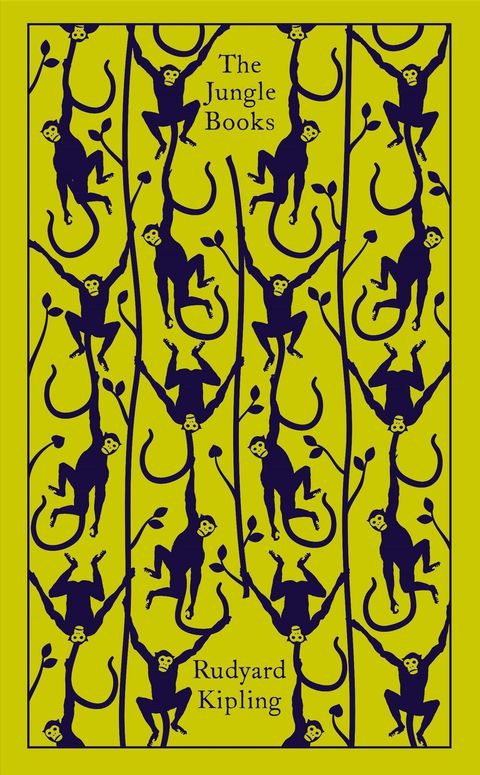
The Jungle Books
SynopsisPlot
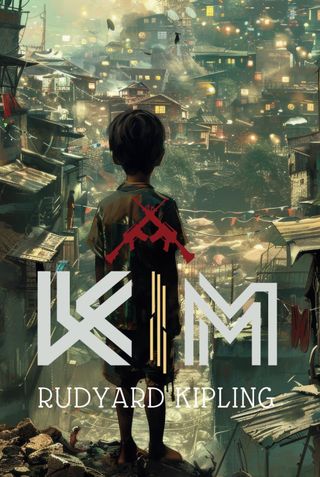
The Jungle Books, regarded as classic stories told by an adult to children and best known for the "Mowgli" series, also constitutes a complex literary work of art in which the whole of Kipling's philosophy of life is expressed in miniature. The stories, a mixture of fantasy, myth and magic, are underpinned by Kipling's abiding preoccupation with the theme of self-discovery and the nature of the "Law."
Story
About this book
The Jungle Books brings together two volumes of stories Rudyard Kipling published in the 1890s. The best-known tales follow Mowgli, a boy raised by wolves in the forests of central India, who learns the rules and customs of animal society while gradually coming to understand his own place among them. Around Mowgli stand characters like the bear Baloo, the panther Bagheera, and the tiger Shere Khan, each carrying a distinct role in the social order of the jungle. The stories draw on older traditions of beast fables and elements of Buddhist thought, filtered through Kipling's own upbringing in British India.
Not all the tales concern Mowgli. The collection also includes stories set in different parts of the world, featuring seals in the North Pacific, a young mongoose in a colonial bungalow, and elephants in their hidden gathering places. What connects them is a recurring concern with rules of conduct, loyalty, and the process of learning where one belongs. Kipling called this framework the Law, a set of principles that governs behavior across species and settings.
The stories blend fantasy, myth, and close observation of animal behavior. Kipling wrote them as tales told by an adult to children, but their layered structure and symbolic weight have kept them in print and in discussion well beyond their original audience.