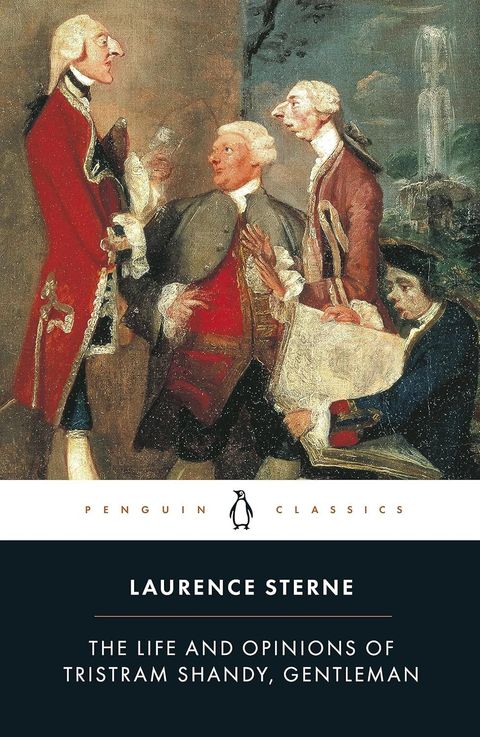
The Life and Opinions of Tristram Shandy, Gentleman
SynopsisPlot
Part novel, part digression, its gloriously disordered narrative interweaves the birth and life of the unfortunate 'hero' Tristram Shandy, the eccentric philosophy of his father Walter, the amours and military obsessions of Uncle Toby, and a host of other characters, including Dr Slop, Corporal Trim and the parson Yorick. A joyful celebration of the endless possibilities of the art of fiction, Tristram Shandy is also a wry demonstration of its limitations. The text and notes of this volume are based on the acclaimed Florida Edition, with a critical introduction by Melvyn New and Christopher Ricks's introductory essay from the first Penguin Classics edition.
Story
About this book
Laurence Sterne published this book in nine volumes between 1759 and 1767. It sets out to tell the story of its narrator's life, starting before his birth, then wanders away from that task. Digressions, jokes, blank and marbled pages, and odd typography interrupt the text so often that Tristram barely gets himself born by the third volume.
The cast around Tristram carries much of the energy. His father Walter holds elaborate theories about names, noses, and education, delivered in speeches other characters rarely follow. Uncle Toby, a retired soldier wounded at the siege of Namur, re-enacts military campaigns on a bowling green with Corporal Trim. The parson Yorick and the physician Dr Slop bring their own quirks. Sterne uses them to show people talking past one another.
The broken structure has led readers and scholars to compare the book with experimental fiction written much later. Sterne plays with the conventions of storytelling, adding visual oddities and direct addresses to the reader that keep the printed object in view. This Penguin Classics edition follows the text and notes of the Florida Edition, with a critical introduction by Melvyn New and an essay by Christopher Ricks.