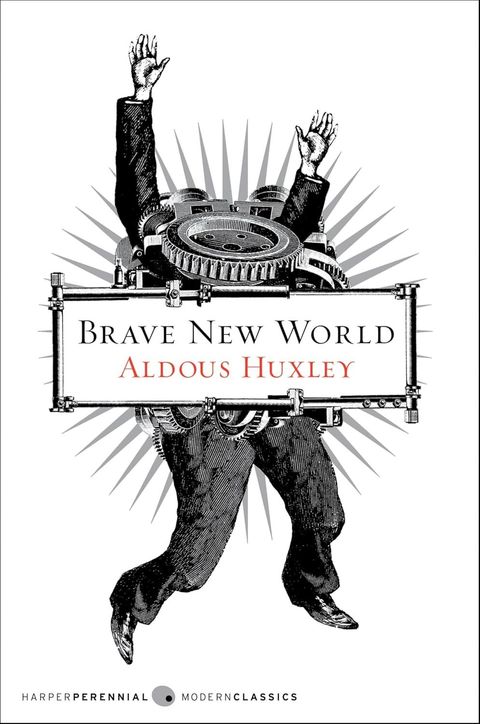
Brave New World
SynopsisPlot
Huxley was a man of incomparable talents: equally an artist, a spiritual seeker, and one of history’s keenest observers of human nature and civilization. Brave New World, his masterpiece, has enthralled and terrified millions of readers, and retains its urgent relevance to this day as both a warning to be heeded as we head into tomorrow and as thought-provoking, satisfying work of literature. Written in the shadow of the rise of fascism during the 1930s, Brave New World likewise speaks to a 21st-century world dominated by mass-entertainment, technology, medicine and pharmaceuticals, the arts of persuasion, and the hidden influence of elites.
Story
About this book
Brave New World, first published in 1932, is set in a future society where human beings are produced through artificial reproduction and sorted into rigid social castes before birth. The story takes place in the year 632 AF, a calendar that counts forward from Henry Ford, who is treated as a near-divine figure. Citizens are conditioned from infancy to accept their roles, and a widely available drug called soma keeps the population calm and compliant. Individuality, family bonds, and strong emotions are treated as threats to stability.
The novel follows Bernard Marx, an outsider among the privileged upper caste, and Lenina Crowne, who largely accepts the world as it is. Their visit to a reservation outside the controlled society introduces them to people who still live with illness, aging, and freedom. The encounter sets up a collision between two ways of life and raises questions about what is lost when comfort replaces choice.
Aldous Huxley wrote the book during a period marked by the rise of authoritarian movements in Europe. Its concerns with mass production, pharmaceutical control, engineered consent, and entertainment as a tool of power have kept it a frequent reference point in discussions about technology and governance.