The Handmaid's Tale
SynopsisPlot
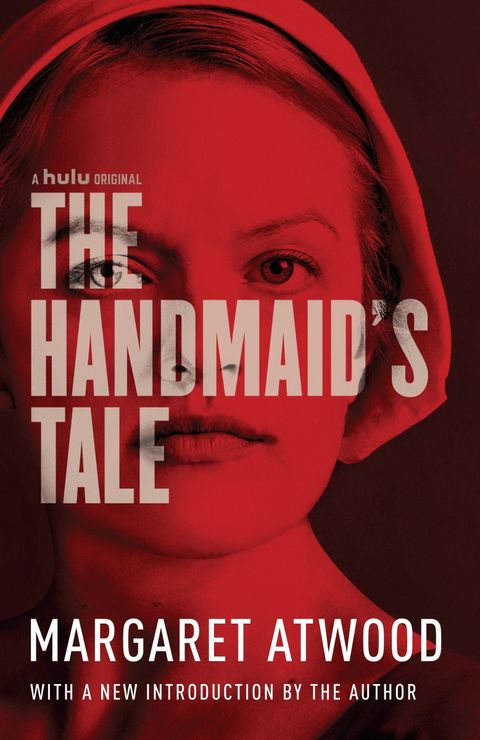
In Margaret Atwood’s dystopian future, environmental disasters and declining birthrates have led to a Second American Civil War. The result is the rise of the Republic of Gilead, a totalitarian regime that enforces rigid social roles and enslaves the few remaining fertile women. Offred is one of these, a Handmaid bound to produce children for one of Gilead’s commanders. Deprived of her husband, her child, her freedom, and even her own name, Offred clings to her memories and her will to survive.
Story
About this book
The Handmaid's Tale, published in 1985, is set in a near-future New England where the government of the United States has been overthrown. In its place stands the Republic of Gilead, a totalitarian state that enforces rigid religious and patriarchal rules. Environmental damage and falling birth rates have led to a second American civil war, and the new regime assigns the few remaining fertile women to its ruling men.
Offred has lost her husband, her daughter, and her own name. She lives under constant surveillance in the household of a high-ranking Commander, her role reduced to reproduction. Through her account, the story moves between her constrained present and fragments of her earlier life, when the freedoms she took for granted were dismantled step by step. Memory and obedience pull against each other in her daily life.
Atwood, a Canadian writer, traces how a state can erase individual identity and remove women's agency, and how small acts of resistance persist under close control. The book took the Governor General's Award for 1985 and the inaugural Arthur C. Clarke Award in 1987, with nominations for the Nebula Award, the Booker Prize, and the Prometheus Award.