Man's Search for Meaning

SynopsisPlot
Viktor Frankl’s riveting account of his time in the Nazi concentration camps, and his insightful exploration of the human will to find meaning in spite of the worst adversity, has offered solace and guidance to generations of readers since it was first published in 1946. At the heart of Frankl’s theory of logotherapy (from the Greek word for “meaning”) is a conviction that the primary human drive is not pleasure, as Freud maintained, but rather the discovery and pursuit of what the individual finds meaningful. Today, as new generations face new challenges and an ever more complex and uncertain world, Frankl’s classic work continues to inspire us all to find significance in the very act of living, in spite of all obstacles.
Story
About this book
Viktor Frankl was an Austrian psychiatrist who survived several Nazi concentration camps during the Second World War. First published in 1946, this book combines a memoir of that experience with an outline of his psychological framework, logotherapy. The name draws on the Greek root logos, which Frankl connected with meaning, and the approach rests on the idea that the primary human motivation is not pleasure but the search for personal significance.
Frankl draws on observations from his time in the camps to illustrate how people responded to extreme suffering. He noticed that prisoners who held on to a sense of purpose, whether through connection to others, unfinished work, or inner conviction, were often better able to endure. Suffering cannot always be avoided, he argues, but a person can still choose how to respond to it.
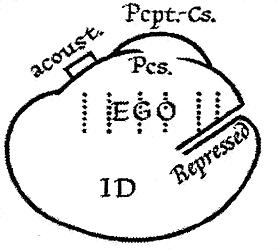
The second part of the book presents logotherapy in more structured terms, describing methods Frankl later used with patients in clinical practice. He positions his approach as distinct from Freudian psychoanalysis and Adlerian psychology, offering a third direction within Viennese psychotherapy. The book was originally written in German and has since been translated into many languages and read by successive generations.