My View of the World
SynopsisPlot
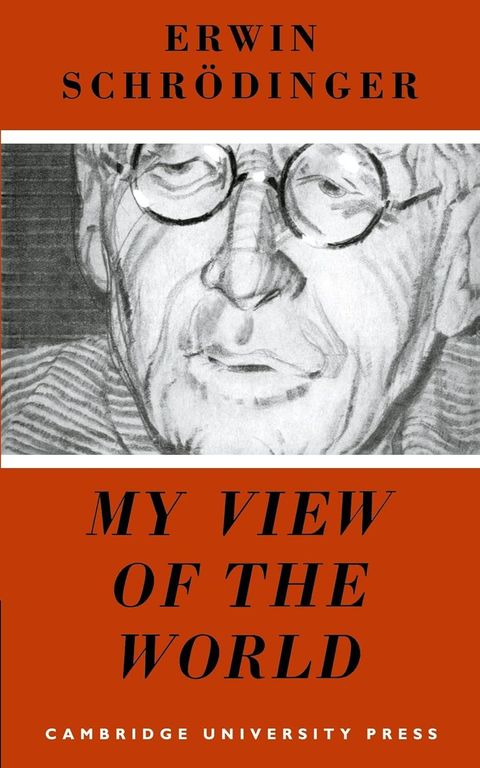
A Nobel prize winner, a great man and a great scientist, Erwin Schrödinger has made his mark in physics, but his eye scans a far wider horizon: here are two stimulating and discursive essays which summarize his philosophical views on the nature of the world. Schrödinger's world view, derived from the Indian writings of the Vedanta, is that there is only a single consciousness of which we are all different aspects. He admits that this view is mystical and metaphysical and incapable of logical deduction. But he also insists that this is true of the belief in an external world capable of influencing the mind and of being influenced by it.
Story
About this book
Erwin Schrödinger, the Austrian physicist who received the Nobel Prize for his work in quantum mechanics, wrote these two philosophical essays at different points in his life. Rather than discussing wave equations or atomic theory, the book sets out his broader thinking about consciousness, identity, and the relationship between mind and the external world. Schrödinger draws heavily on the Vedanta tradition of Indian philosophy, arriving at the position that there is only a single consciousness, and that individual minds are different aspects of it rather than separate entities.
Schrödinger acknowledges openly that this view is metaphysical and cannot be proven through logical deduction alone. But he argues that the same limitation applies to more conventional assumptions, including the common belief that an external world exists independently of the mind and interacts with it. The essays are discursive and wide-ranging, moving between physics, biology, ethics, and Eastern philosophy. His philosophical outlook connects to what the book's own framing describes as a reverence for life, a stance that follows naturally from the idea that all conscious experience shares a single root.
The book is short and direct, written for a general audience rather than specialists in either physics or philosophy. Schrödinger's tone throughout is exploratory, presenting his positions as honest personal conclusions rather than doctrines.