Ethics
SynopsisPlot
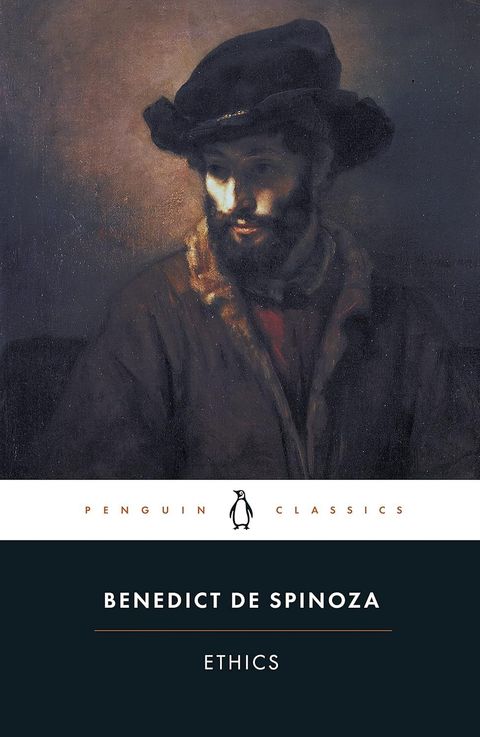
Published shortly after his death, the Ethics is undoubtedly Spinoza's greatest work - an elegant, fully cohesive cosmology derived from first principles, providing a coherent picture of reality, and a guide to the meaning of an ethical life. Following a logical step-by-step format, it defines in turn the nature of God, the mind, the emotions, human bondage to the emotions, and the power of understanding - moving from a consideration of the eternal, to speculate upon humanity's place in the natural order, the nature of freedom and the path to attainable happiness. A powerful work of elegant simplicity, the Ethics is a brilliantly insightful consideration of the possibility of redemption through intense thought and philosophical reflection.
Story
About this book
Benedict de Spinoza wrote the Ethics while living in the Dutch Republic, and it was published only after his death in 1677. The work follows a geometric format borrowed from mathematics: definitions, axioms, propositions, and demonstrations that build on one another in order. Spinoza used this structure to describe reality starting from the nature of God, understood not as a separate creator but as identical with nature.
The book is divided into five parts. The first sets out Spinoza's account of substance and God. The second treats the mind and its relation to the body. The third analyzes emotions as natural events that follow regular patterns. The fourth examines human bondage, the limited power people hold over their own emotional lives. The fifth asks how clearer understanding can lead toward freedom and steadiness.
Spinoza ground optical lenses for a living during the years he worked on the text, and he shared parts of it privately rather than printing it while alive. The closing sections connect knowledge with a durable kind of happiness, treating careful thought as a path out of confusion about the causes of one's own feelings.