The Darkroom of Damocles
SynopsisPlot
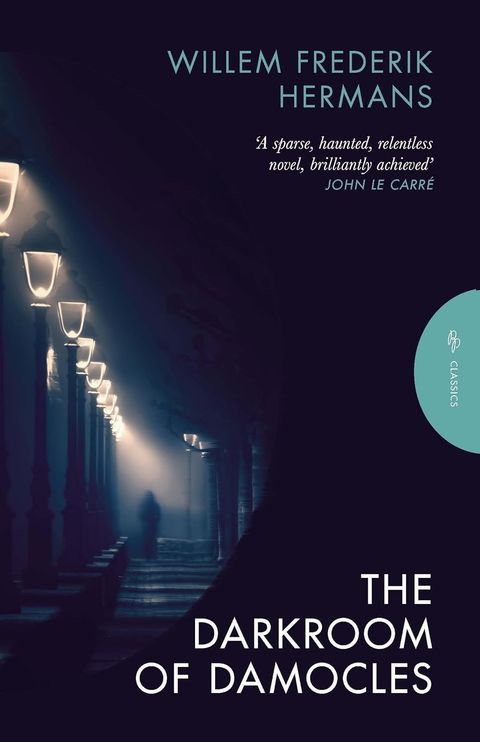
Under occupation, Henri Osewoudt finds himself drawn into the resistance by his near-doppelgänger, the ruthless Dorbeck, Soon Osewoudt has entered a world that is a photo negative of his previous humdrum existence - carrying messages, helping British agents to escape and killing collaborators. But how much of it is real?
Story
About this book
During the German occupation of the Netherlands, Henri Osewoudt leads a small, unremarkable life until a man named Dorbeck appears. Dorbeck looks almost exactly like him and pulls him into resistance work. Osewoudt begins carrying messages, helping British agents escape, and killing people identified as collaborators. His ordinary world flips into something dangerous and unrecognizable, described in the novel as a kind of photo negative of his former existence.
The book's central tension lies in uncertainty. How much of what Osewoudt experiences is verifiable, and how much depends on the word of a single person who may or may not exist as others see him? Dorbeck is both guide and shadow, and the line between resistance heroism and criminal violence keeps shifting. The story raises questions about identity, moral responsibility under occupation, and whether wartime conditions dissolve the difference between permitted and forbidden acts.
Willem Frederik Hermans published the novel in Dutch in 1958, and it became one of the most widely discussed works of postwar Dutch literature. The English translation brought the book to a broader audience under the title The Darkroom of Damocles. Hermans set much of his fiction against the landscape of wartime and postwar Holland, returning often to themes of distrust and ambiguity.