The Clown
SynopsisPlot
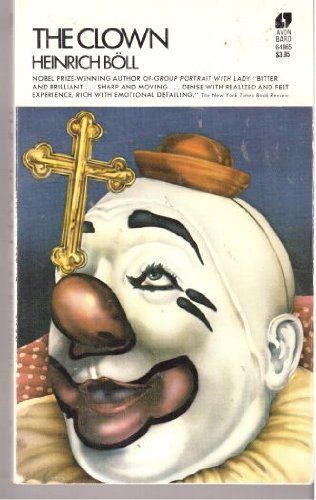
Acclaimed entertainer Hans Schneir collapses when his beloved Marie leaves him because he won’t marry her within the Catholic Church. The desertion triggers a searing re-examination of his lifeâ the loss of his sister during the war, the demands of his millionaire father and the hypocrisies of his mother, who first fought to “save” Germany from the Jews, then worked for “reconciliation” afterwards.
Story
About this book
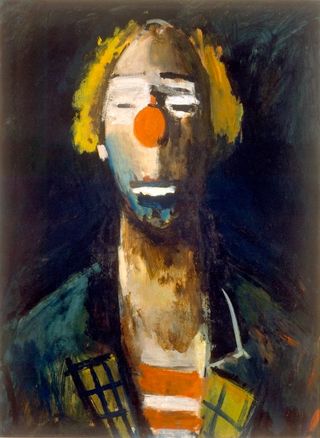
Hans Schnier is a professional clown and mime living in Bonn, the former West German capital. When his partner Marie leaves him over his refusal to marry within the Catholic Church, Hans falls into a personal crisis. Alone in his apartment, injured and unable to perform, he begins telephoning people from his past, replaying memories and confrontations that expose the fractures running through postwar German society.
Much of the novel unfolds through these calls and recollections. Hans revisits the death of his sister during the war, his strained relationship with his wealthy father, and the behavior of his mother, who supported the Nazi regime and later reinvented herself as an advocate for reconciliation. The people around him, many of them Catholic intellectuals, appear comfortable with their own contradictions in ways Hans cannot accept. His refusal to adapt or perform socially isolates him further.
Heinrich Böll published the novel in 1963, during a period when questions about guilt, conformity, and institutional authority were pressing concerns in West Germany. The story is set almost entirely within the span of a single evening, giving it a compressed, claustrophobic quality as Hans moves between present distress and layered memory.