Wilhelm Meister's Apprenticeship
SynopsisPlot
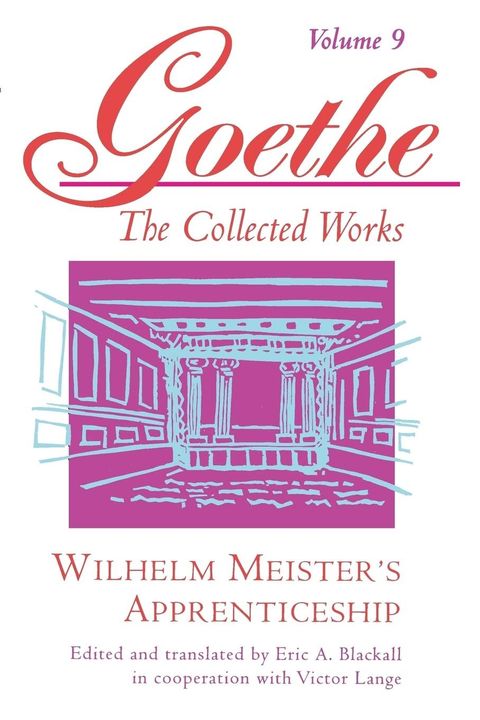
The story centers on Wilhelm, a young man living in the mid-1700s who strives to break free from the restrictive bourgeois world of his upbringing and seek fulfillment as an actor and playwright. Goethe’s novel had a huge impact on the Romantics. Hegel, Schelling, Novalis, and Schopenhauer considered it one of the most important novels yet written. Schlegel famously called it one of the “three tendencies of the age,” along with the French Revolution and the philosophy of Fichte. And Beethoven, Schubert, and Schumann composed songs to poems from the novel. It also had a major influence on nineteenth-century British writers, including Thomas Carlyle, who was its first English translator, and George Eliot. Drawn from Princeton’s authoritative collected works of Goethe, this is the definitive English version of a landmark of world literature.
Story
About this book
Wilhelm Meister's Apprenticeship is Johann Wolfgang von Goethe's second novel. It follows Wilhelm, a young man in the mid-1700s who wants to leave behind the commercial middle-class world of his upbringing. He hopes to find purpose in the theater, first as an actor and later as a playwright, and his path crosses with traveling performers and other figures who shape his sense of art and society.
The book is often described as the first Bildungsroman, a German term for a novel built around one character's formation and growth from youth into maturity. It drew strong responses from German thinkers: Hegel, Schelling, Novalis, and Schopenhauer counted it among the most important novels then written, and Friedrich Schlegel placed it beside the French Revolution and Fichte's philosophy as a defining tendency of the age.
Goethe placed poems and songs inside the prose, and Beethoven, Schubert, and Schumann later set some of them to music. The novel also reached British readers in the nineteenth century, where it shaped writers including George Eliot, and Thomas Carlyle made the first English translation. This edition comes from Princeton's collected works of Goethe.