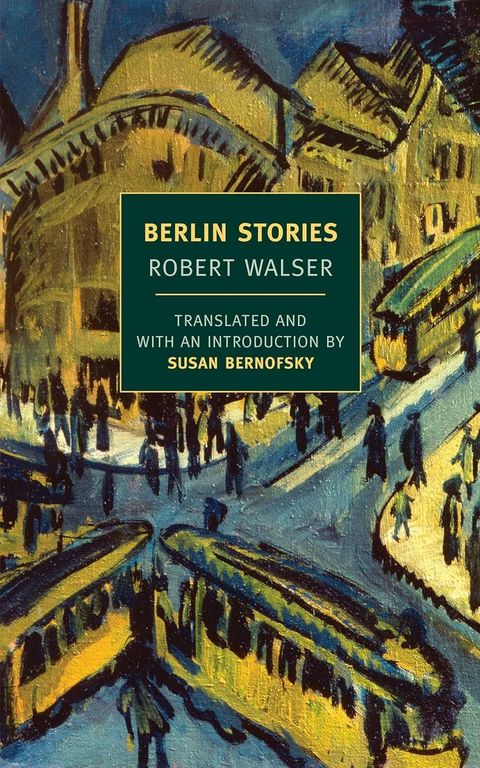
Berlin Stories
SynopsisPlot
Berlin Stories collects his alternately celebratory, droll, and satirical observations on every aspect of the bustling German capital, from its theaters, cabarets, painters’ galleries, and literary salons, to the metropolitan street, markets, the Tiergarten, rapid-service restaurants, and the electric tram. Originally appearing in literary magazines as well as the feuilleton sections of newspapers, the early stories are characterized by a joyous urgency and the generosity of an unconventional guide. Later pieces take the form of more personal reflections on the writing process, memories, and character studies. All are full of counter-intuitive images and vignettes of startling clarity, showcasing a unique talent for whom no detail was trivial, at grips with a city diving headlong into modernity.
Story
About this book
Robert Walser, a Swiss writer, moved to Berlin in 1905 to be near his older brother Karl, who had established himself as a stage-set designer. The city was accelerating into industrial modernity, and Walser responded with short prose pieces about nearly everything he met: theaters, cabarets, painters' galleries, literary salons, street markets, the Tiergarten park, quick-service restaurants, and the electric tram.
The earlier pieces read like notes from an enthusiastic but unconventional guide, mixing celebration with dry humor and occasional satire. Later contributions turn inward, touching on the writing process, on memory, and on brief character studies. Throughout, small things receive careful attention: a tram ride, a restaurant meal, the mood of one street. Walser noticed what others passed over, and his sentences often land on precise, counter-intuitive images.
Many of these texts first appeared in literary magazines and in the feuilleton sections of newspapers, the cultural pages of the daily press, a format suited to compact observation. Berlin Stories gathers them into one volume, following Walser's years in the German capital and giving a street-level view of a city then diving into modernity.