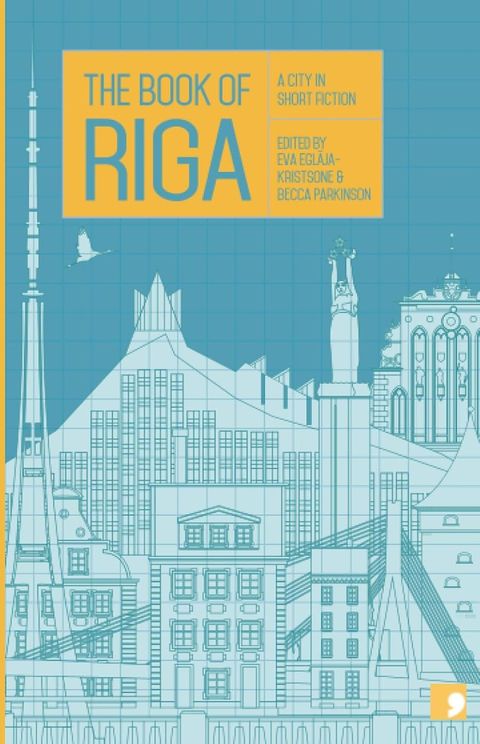
The Book of Riga: A City in Short Fiction
SynopsisPlot
Riga may be over 800 years old as a city, but its status as capital of an independent Latvia is only a century old, with half of that time spent under Soviet rule. Despite this, it has established itself as a vibrant, creative hub, attracting artists, performers, and writers from across the Baltic region. As its history might suggest, Riga is a work in progress; and for many of the characters in these stories, it is the possibilities of what the city might become, more than merely what it is now, that drives the imagination of its people.
Story
About this book
Riga has existed for over eight centuries, but Latvia's independence as a nation is far younger. For roughly half of the past hundred years, the city served as a capital under Soviet control. This anthology collects short fiction set in and shaped by that layered history, drawing on writers connected to the Baltic region. The collection is edited by Eva Eglaja-Kristsone, with contributions introduced alongside work by Vaira Vike-Freiberga, and translated into English by Becca Parkinson.
The stories reflect a city defined by contrasts and unfinished change. Several characters are occupied not so much with Riga as it stands today, but with what it might still become. That forward-looking tension sits alongside darker humor and a recurring pull toward myth, both qualities that mark the city's literary culture. Riga appears here as a place still being written, where layers of German, Russian, and Latvian influence press against one another in daily life.
The anthology belongs to a series presenting cities through local short fiction. For Riga, the format suits a place whose identity has shifted repeatedly within living memory, making each perspective partial and each story a fragment of a larger, unresolved picture.