Dubliners
SynopsisPlot
Each of the beautifully written short stories in this collection precisely details a brief scene in the life of a resident of Dublin at the turn of the 20th century. Although the characters do not know each other, their experiences unfold along the same streets and often overlap thematically. Their tragedies mirror that of Ireland, a country struggling for political identity and held back, in Joyce's view, by rigid religious ideas and adherence to tradition.
Story
About this book
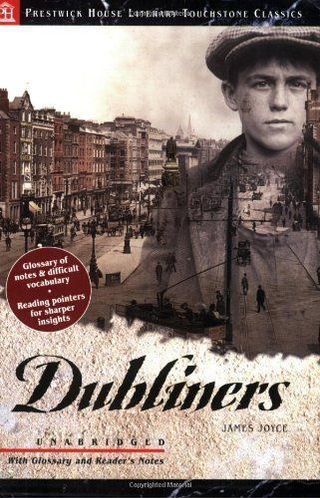
Dubliners is a collection of fifteen short stories by James Joyce, first published in 1914 after a decade of disputes with publishers over its content. Joyce resisted pressure to remove real place names, specific language, and even whole stories. Set in Dublin at the turn of the twentieth century, each piece follows an ordinary resident through a brief, closely observed episode. The characters do not know one another, yet their lives unfold along the same streets and share concerns: missed chances, isolation, and regret.
Joyce organized the collection to move through four stages of life. The opening stories, including The Sisters, An Encounter, and Araby, center on childhood. A second group addresses adolescence, followed by stories of adult life such as A Little Cloud, Counterparts, and A Painful Case. The final section turns to public and communal experience. The closing story, The Dead, stands somewhat apart in scope and length.
Joyce described his goal as writing a chapter of the moral history of Ireland, choosing Dublin because he saw it as a centre of paralysis. The stories examine how religious rigidity, social expectation, and attachment to tradition shape daily life, while his ear for local speech gives the collection a concrete sense of place.