Angela's Ashes
SynopsisPlot
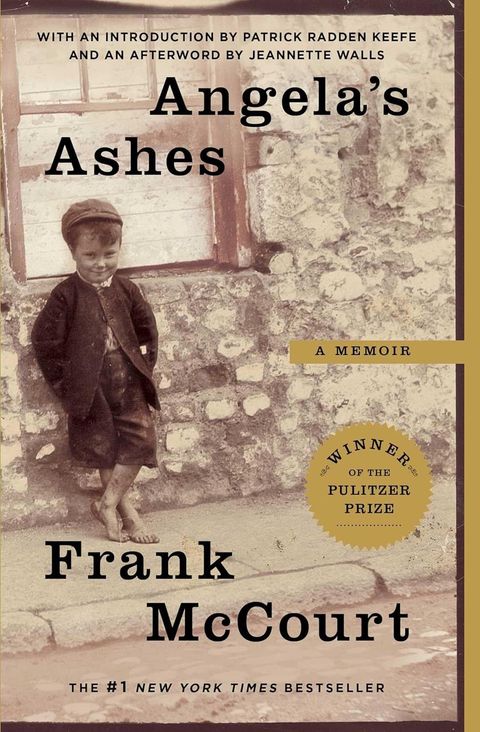
“When I look back on my childhood I wonder how I managed to survive at all. It was, of course, a miserable childhood: the happy childhood is hardly worth your while. Worse than the ordinary miserable childhood is the miserable Irish childhood, and worse yet is the miserable Irish Catholic childhood.” So begins the luminous memoir of Frank McCourt, born in Depression-era Brooklyn to recent Irish immigrants and raised in the slums of Limerick, Ireland. Frank’s mother, Angela, has no money to feed the children since Frank’s father, Malachy, rarely works, and when he does he drinks his wages. Yet Malachy—exasperating, irresponsible, and beguiling—does nurture in Frank an appetite for the one thing he can provide: a story. Frank lives for his father’s tales of Cuchulain, who saved Ireland, and of the Angel on the Seventh Step, who brings his mother babies.
Story
About this book
Frank McCourt was born in Brooklyn during the Depression to parents who had recently emigrated from Ireland. The family soon returned to Limerick, where they settled in the city's poorer lanes during the 1930s and 40s. His mother, Angela, struggled to feed and clothe the children while his father, Malachy, drifted between jobs and spent what little he earned on drink. The memoir follows Frank through these early years, recording hunger, illness, and the small rituals of survival in a household that rarely had enough.
Malachy was unreliable as a provider, but he carried stories. He told Frank about Cuchulain, the legendary warrior of Irish myth, and about the Angel on the Seventh Step, a family tale tied to the arrival of new siblings. These stories gave Frank something durable in circumstances that offered very little else. The book traces how language and narrative took root in a child surrounded by scarcity.
Limerick in those decades was a city of narrow streets, church authority, and tightly packed neighborhoods where poverty was ordinary and widely shared. McCourt describes relatives, neighbors, and schoolteachers with specific detail, building a portrait of a community shaped by Catholic tradition, limited opportunity, and close quarters.