The Grapes of Wrath
SynopsisPlot
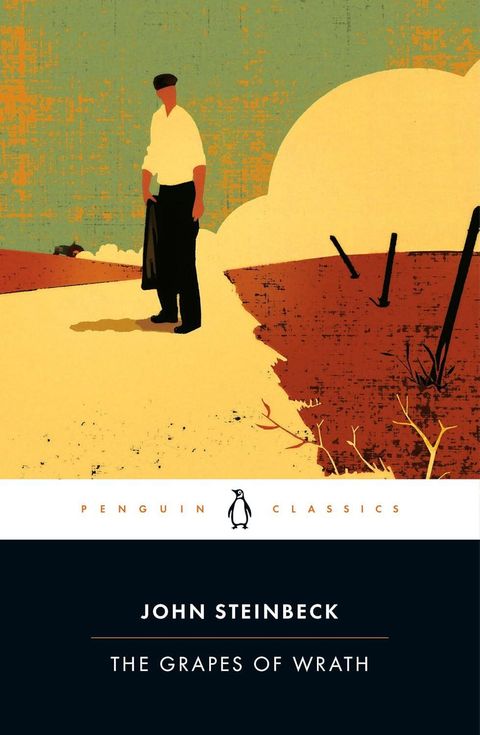
First published in 1939, Steinbeck’s Pulitzer Prize-winning epic of the Great Depression chronicles the Dust Bowl migration of the 1930s and tells the story of one Oklahoma farm family, the Joads—driven from their homestead and forced to travel west to the promised land of California. Out of their trials and their repeated collisions against the hard realities of an America divided into Haves and Have-Nots evolves a drama that is intensely human yet majestic in its scale and moral vision, elemental yet plainspoken, tragic but ultimately stirring in its human dignity.
Story
About this book
The Grapes of Wrath, first published in 1939, follows the Joad family as they lose their Oklahoma farm during the Dust Bowl and set out for California. Steinbeck traces their route westward along Highway 66 in an overloaded truck, joining thousands of other displaced families searching for work and stability. The novel alternates between the Joads' specific story and broader chapters that describe the social and economic forces reshaping the American landscape during the 1930s.
In California, the Joads discover that the promise of plentiful work is largely false. Migrant camps overflow with families competing for the same low-paying jobs picking fruit and cotton. Steinbeck documents the tension between desperate workers and the growers who profit from their surplus, and he gives sustained attention to the small, practical choices people make under pressure: whether to cross a picket line, whether to share food with strangers, whether to keep moving or stay.
The book won the Pulitzer Prize and played a visible role in public debate about migrant labor conditions. Steinbeck drew on firsthand reporting he had done in California's agricultural valleys, and much of the novel's detail comes from that fieldwork.