The Odyssey
SynopsisPlot
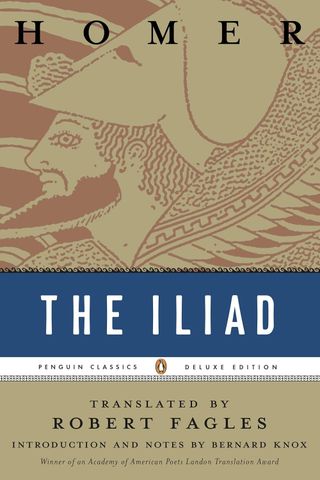
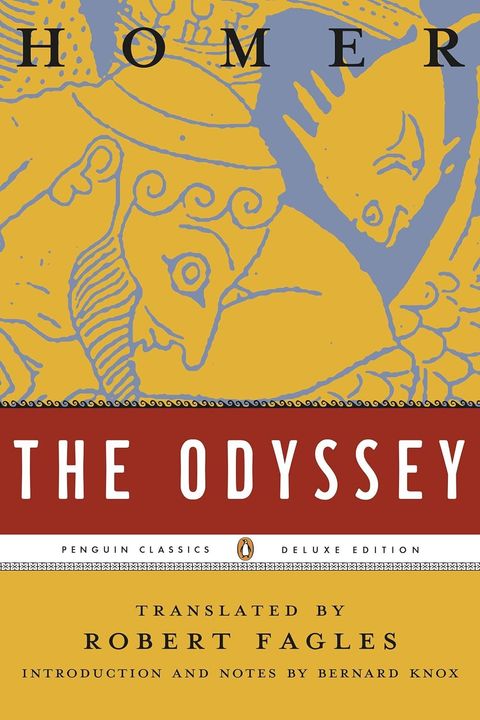
Robert Fagles, winner of the PEN/Ralph Manheim Medal for Translation and a 1996 Academy Award in Literature from the American Academy of Arts and Letters, presents us with Homer's best-loved and most accessible poem in a stunning modern-verse translation. "Sing to me of the man, Muse, the man of twists and turns driven time and again off course, once he had plundered the hallowed heights of Troy." So begins Robert Fagles' magnificent translation of the Odyssey, which Jasper Griffin in the New York Times Book Review hails as "a distinguished achievement."
Story
About this book
The Odyssey is an ancient Greek epic poem attributed to Homer, believed to have been composed near the end of the 8th century BC in Ionia, the Greek-speaking coastal region of Anatolia. It follows Odysseus as he tries to return home to the island of Ithaca after the fall of Troy. The voyage takes ten years and carries him through encounters with storms, hostile lands, divine interference, and creatures drawn from Greek myth. Meanwhile, his household on Ithaca faces its own pressures as suitors crowd his palace and court his wife Penelope, assuming he is dead.
The poem works partly as a sequel to the Iliad, Homer's account of the Trojan War, but shifts its focus from battlefield conflict to a single person's long effort to reach home. Themes of endurance, cunning, loyalty, and homecoming run through the narrative. Odysseus is defined less by strength than by resourcefulness, and many of the poem's episodes test his ability to adapt.
This edition presents a modern-verse English translation by Robert Fagles, who received the PEN/Ralph Manheim Medal for Translation and a 1996 Academy Award in Literature from the American Academy of Arts and Letters. The Odyssey stands as the second oldest surviving work of Western literature, after the Iliad.