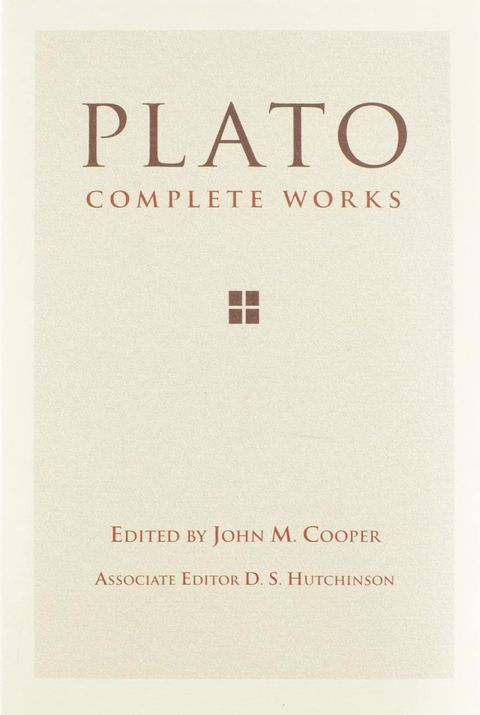
Plato: Complete Works
SynopsisPlot
In his introductory essay, John Cooper explains the presentation of these works, discusses questions concerning the chronology of their composition, comments on the dialogue form in which Plato wrote, and offers guidance on approaching the reading and study of Plato's works. Also included are concise introductions by Cooper and Hutchinson to each translation, meticulous annotation designed to serve both scholar and general reader, and a comprehensive index. This handsome volume offers fine paper and a high-quality Smyth-sewn cloth binding in a sturdy, elegant edition.
Story
About this book
This volume gathers every surviving text attributed to Plato into a single edition. It includes the well-known dialogues such as the Republic, the Symposium, and the Apology, alongside shorter and less frequently read works that are sometimes omitted from smaller collections. The translations were produced by contemporary scholars, with several prepared specifically for this book. John Cooper, who edited the collection, wrote an introductory essay covering questions about the order in which Plato composed these works and the particular challenges of reading philosophy written as dialogue rather than direct argument.
Cooper and D.S. Hutchinson also provided individual introductions to each piece, offering context for the dramatic setting, speakers, and subjects under discussion. Annotations throughout the volume are designed to be useful both to specialists and to readers approaching Plato for the first time. A comprehensive index supports cross-referencing across the full corpus.
Plato wrote in Athens during the fourth century BCE, and his dialogues often feature his teacher Socrates questioning fellow citizens about justice, knowledge, beauty, love, and the nature of the soul. The texts collected here span a wide range of subjects and tones, from myth and myth-like storytelling to close logical argument.