The Canterbury Tales
SynopsisPlot
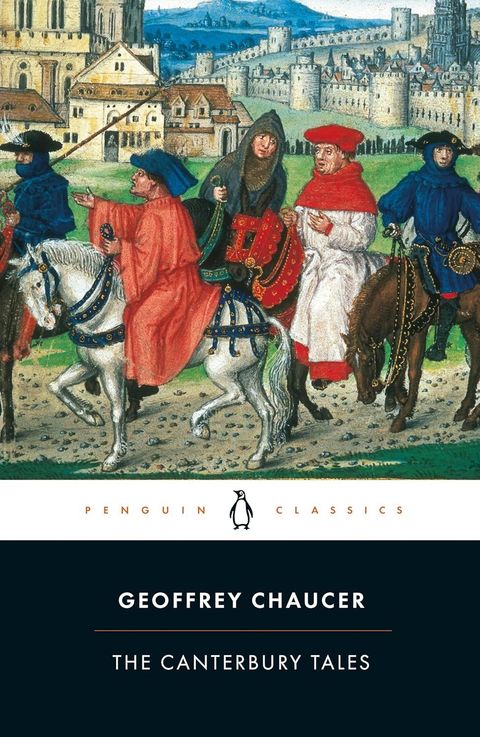
In The Canterbury Tales Chaucer created one of the great touchstones of English literature, a masterly collection of chivalric romances, moral allegories and low farce. A story-telling competition between a group of pilgrims from all walks of life is the occasion for a series of tales that range from the Knight’s account of courtly love and the ebullient Wife of Bath’s Arthurian legend, to the ribald anecdotes of the Miller and the Cook. Rich and diverse, The Canterbury Tales offer us an unrivalled glimpse into the life and mind of medieval England.
Story
About this book
Geoffrey Chaucer composed The Canterbury Tales near the end of the fourteenth century, mostly in verse with some sections in prose. Its frame is a storytelling competition among pilgrims who set out from Southwark, just south of London, and ride toward Canterbury Cathedral, where the shrine of Saint Thomas Becket drew travellers from across medieval England. The company is gathered from many different social positions.
A knight, a miller, a cook, the Wife of Bath, and members of the clergy each tell a tale fitted to their character and rank. The material ranges from courtly romance and moral allegory to broad, coarse comedy. Chaucer uses both the stories and the portraits of the people telling them to examine English society, with particular attention to the Church.
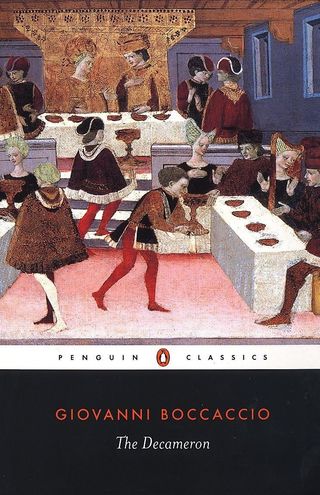
The structure reflects Boccaccio's Decameron, which Chaucer probably met during a diplomatic visit to Italy in 1372. Boccaccio's narrators are nobles in retreat, while Chaucer fills his road with mixed and ordinary company. This edition carries Nevill Coghill's modern English verse translation, prepared because the original Middle English has become difficult for most readers to follow without help.