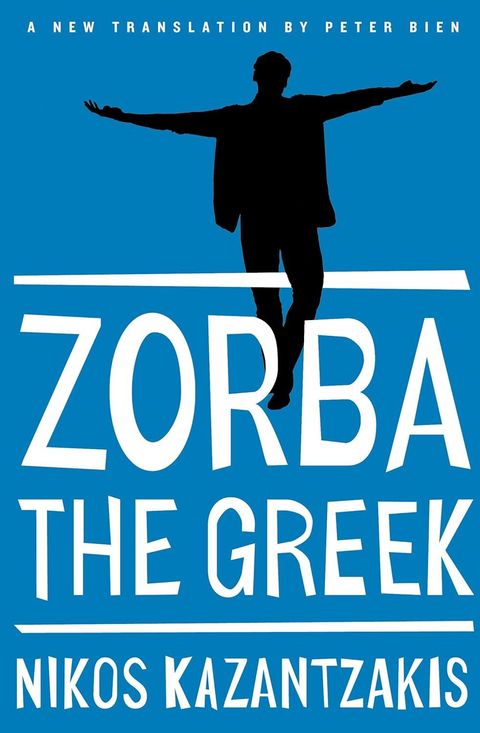
Zorba the Greek
SynopsisPlot
First published in 1946, Zorba the Greek, is, on one hand, the story of a Greek working man named Zorba, a passionate lover of life, the unnamed narrator who he accompanies to Crete to work in a lignite mine, and the men and women of the town where they settle. On the other hand it is the story of God and man, The Devil and the Saints; the struggle of men to find their souls and purpose in life and it is about love, courage and faith.
Story
About this book
First published in 1946, this novel by Nikos Kazantzakis follows an unnamed narrator, a bookish intellectual, who travels to Crete to operate a lignite mine. There he meets Alexis Zorba, a middle-aged working man whose appetite for life stands in sharp contrast to the narrator's cautious, cerebral temperament. The two form an unlikely partnership on the island, and the story unfolds around their daily labour, the local community, and the men and women of the small town where they settle.
Zorba is physical, spontaneous, and unguarded. He dances, eats, argues, and loves without hesitation. The narrator, by contrast, lives largely through books and abstract ideas. Their friction and growing friendship form the novel's central engine, pressing the narrator to reconsider what it means to act rather than merely think. Around them, Kazantzakis draws the landscape and social fabric of rural Crete, with its traditions, unspoken codes, and hard terrain. Questions about faith, courage, and the distance between thought and action run through the story, grounded always in the specific textures of place, work, and the complicated lives of the people nearby.