Lafcadio's Adventures
SynopsisPlot
When Lafcadio Wluiki, a street-smart nineteen-year-old in 1890s Paris, learns that he’s heir to an ailing French nobleman’s fortune, he’s seized by wanderlust. Traveling through Rome in expensive new threads, he becomes entangled in a Church extortion scandal involving an imprisoned Pope, a skittish purveyor of graveyard statuary, an atheist-turned-believer on the edge of insolvency, and all manner of wastrels, swindlers, aristocrats, adventurers, and pickpockets. With characteristic irony, Gide contrives a hilarious detective farce whereby the wrong man is apprehended, while the charmingly perverse Lafcadio—one of the most original creations in all modern fiction—goes free.
Story
About this book
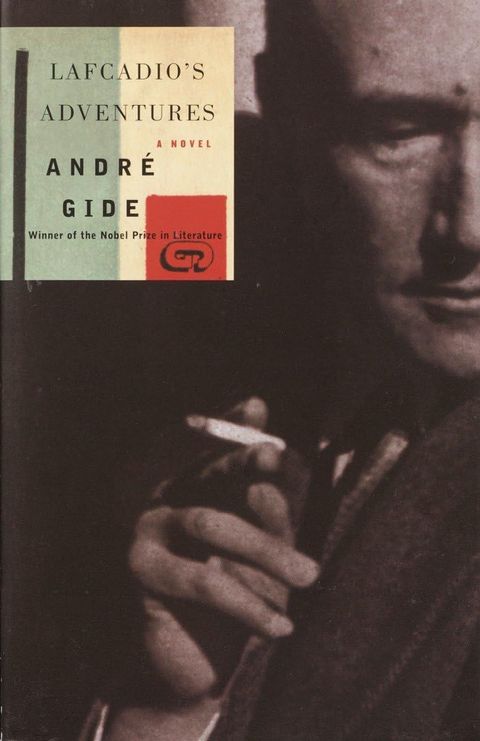
Lafcadio's Adventures, published by André Gide, follows Lafcadio Wluiki, a sharp and resourceful nineteen-year-old living in 1890s Paris. When he discovers he stands to inherit a fortune from a dying French nobleman, Lafcadio sets out across Europe, eventually arriving in Rome dressed in newly purchased finery. There he stumbles into a bizarre Church extortion scheme built around the claim that the Pope has been imprisoned and replaced.
The novel assembles a cast of swindlers, aristocrats, pickpockets, and desperate believers around this central fraud. Among them are a dealer in graveyard statuary, an atheist who has recently converted under financial pressure, and Julius de Baraglioul, a well-meaning but ineffectual brother-in-law tangled in his own certainties. Gide uses these figures to stage a detective farce laced with philosophical mischief, circling around what he called the unmotivated crime, an act carried out without personal gain or grievance, purely to test whether it can be done.
The story moves at a brisk pace through the capitals of late nineteenth-century Europe. Gide, who received the Nobel Prize in Literature in 1947, structured the book as a satire that turns the conventions of crime fiction inside out, letting coincidence and moral ambiguity do the work usually assigned to logic and justice.