Papillon
SynopsisPlot
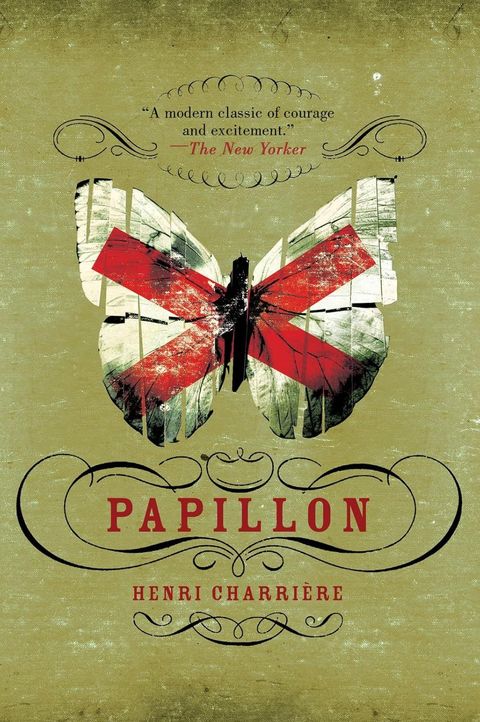
Henri Charrière, nicknamed "Papillon," for the butterfly tattoo on his chest, was convicted in Paris in 1931 of a murder he did not commit. Sentenced to life imprisonment in the penal colony of French Guiana, he became obsessed with one goal: escape. After planning and executing a series of treacherous yet failed attempts over many years, he was eventually sent to the notorious prison, Devil's Island, a place from which no one had ever escaped . . . until Papillon. His flight to freedom remains one of the most incredible feats of human cunning, will, and endurance ever undertaken.
Story
About this book
Henri Charrière was convicted of murder in Paris in 1931 and sentenced to life in the penal colonies of French Guiana. He maintained he was innocent. Known as Papillon, a nickname from a butterfly tattoo on his chest, he spent years in harsh prison camps France maintained overseas, where tropical disease, forced labour and isolation made survival difficult.
His account follows repeated attempts to escape, each planned under extreme constraints and each ending in recapture or failure. The narrative moves through mainland camps and eventually to Devil's Island, a small rocky outcrop in the Îles du Salut group that held prisoners considered the most difficult. Conditions there were arranged so that escape would appear impossible.
The book first appeared in France in 1968, more than twenty years after Charrière's final escape, and met immediate acclaim. Some historians and journalists have questioned how strictly factual the autobiography is, suggesting that certain episodes may draw on the experiences of other convicts. Charrière stood by his version. The penal colony itself was closed in the years after the Second World War.