The Book of Disquiet
SynopsisPlot
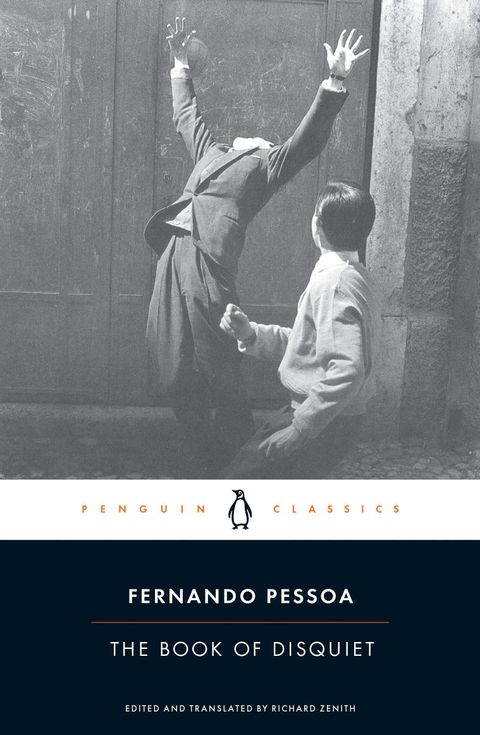
Fernando Pessoa was many writers in one. He attributed his prolific writings to a wide range of alternate selves, each of which had a distinct biography, ideology, and horoscope. When he died in 1935, Pessoa left behind a trunk filled with unfinished and unpublished writings, among which were the remarkable pages that make up his posthumous masterpiece, The Book of Disquiet, an astonishing work that, in George Steiner's words, "gives to Lisbon the haunting spell of Joyce's Dublin or Kafka's Prague."
Story
About this book
Fernando Pessoa wrote under many invented identities, each with its own personality, style, and even astrological chart. Most fragments in The Book of Disquiet are attributed to one of them, Bernardo Soares, an assistant bookkeeper in Lisbon. The text takes the shape of a diary or fictional autobiography, gathering observations, aphorisms, and reflections on solitude, routine, and the passage of time. There is no conventional plot. Instead, short prose passages circle around identity, perception, and interior life.
Pessoa died in 1935, leaving a trunk of unfinished and unpublished manuscripts. The Book of Disquiet first appeared in Portuguese in 1982, assembled from those papers forty-seven years after his death. Because the pages were loose and unordered, editions differ in how they sequence them. The English translation by Margaret Jull Costa presents the texts chronologically.
Lisbon runs through the book as its constant setting. The narrator's work as a bookkeeper keeps him close to offices, streets, and ordinary routines, and these small details become material for reflection. The writing sits between modernist prose poetry and personal essay, carried by a voice that treats daily life as both a burden and a subject of sustained attention.